
Brown Leaves, Tips and Edges on Plants
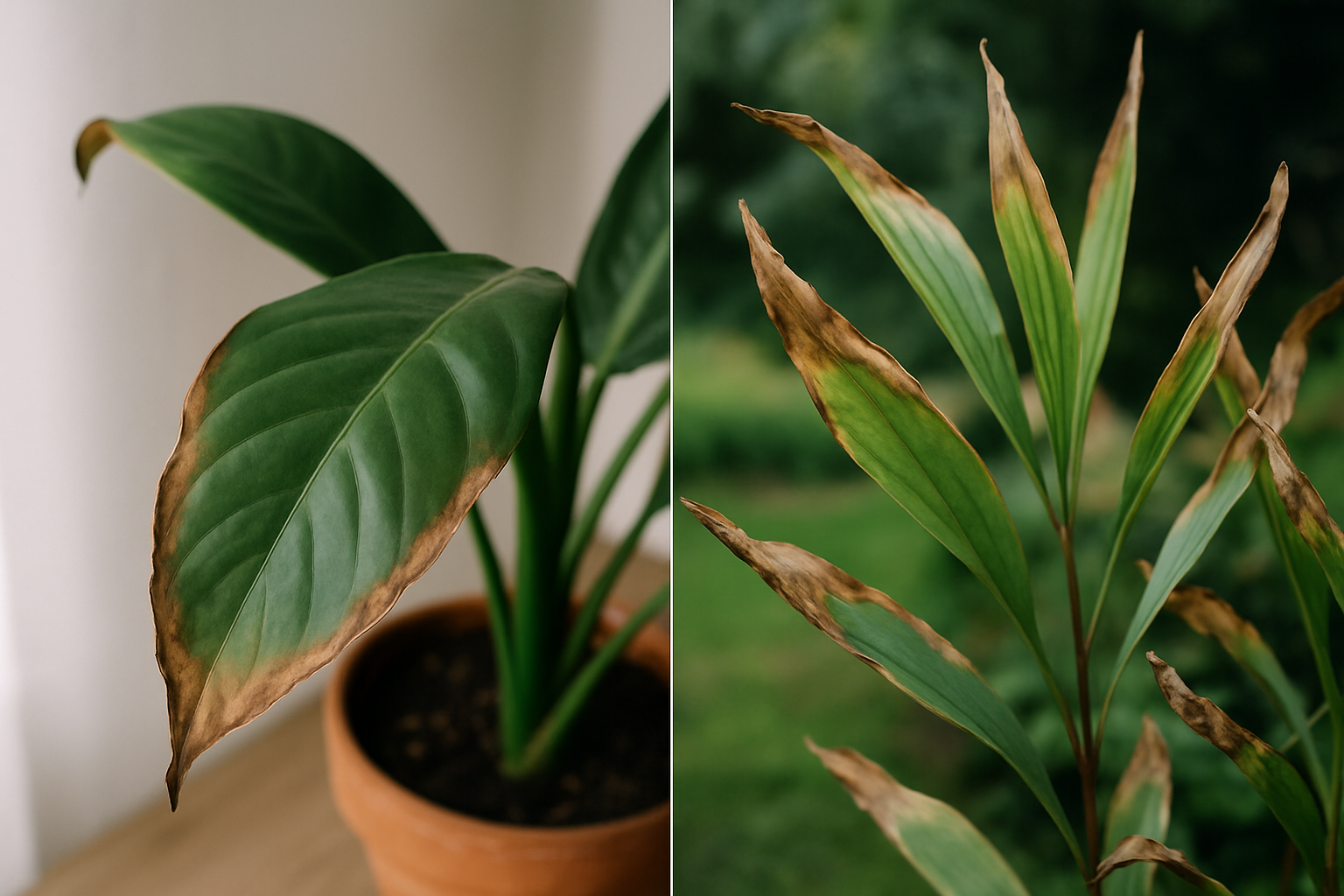
What Do Brown Leaves or Edges Mean?
Brown leaves, tips or edges are a common sight on many plants, both indoors and outdoors. These symptoms can look worrying, but they don't always mean your plant is in serious trouble. Brown areas often signal that something in the plant's environment isn't quite right, such as water, humidity, or light. Sometimes, it's just a sign of natural aging.
Common Causes Indoors and Outdoors
Brown leaf edges can have several causes. Indoors, dry air, inconsistent watering, or drafts are frequent culprits. Outdoors, sunburn, drought, or frost can play a role. To learn more about specific causes and how to recognize them, see Causes of Brown Leaves and Edges.
First Aid: What Can You Do Right Away?
If you spot brown tips or edges, start by checking the soil moisture and the plant's location. Avoid making drastic changes all at once. For a step-by-step approach, visit First Aid for Brown Leaves and Edges.
When Should You Be Concerned?
Some browning is normal, especially on older leaves. However, if you see rapid spreading, wilting, or the entire plant declining, it may be time to act. Find out more about warning signs at When to Worry About Brown Leaves.
Examples: Houseplants & Garden Plants
Brown edges can look different depending on the plant. Curious how this shows up on popular species? See real-life examples for houseplants and garden plants.
Related Topics
Frequently Asked Questions
- Should I cut off brown leaves right away?
- It's not always necessary to remove brown leaves immediately. If the leaf is mostly brown or dry, you can trim it off with clean scissors. For leaves with only minor brown tips, it's fine to leave them. Removing too many leaves at once can stress the plant.
- Can a plant recover from brown leaf edges?
- Recovery depends on the cause and how quickly it's addressed. While brown areas themselves won't turn green again, new healthy growth is possible if the underlying issue is resolved.
- How soon will I see improvement after making changes?
- Visible improvement can take anywhere from a few days to several weeks. New growth is usually the first sign that your plant is responding well. Existing brown spots will remain, but no further browning is a good sign.
- Is it normal for older leaves to turn brown?
- Yes, it's natural for older leaves to brown and die off as part of the plant's life cycle. If only the oldest leaves are affected and new growth looks healthy, there's usually no need to worry.
- Is bruine-bladeren-en-randen toxic to dogs and cats?
- bruine-bladeren-en-randen is generally considered toxic to dogs and cats. Its sap can irritate the mouth, skin or stomach if leaves are chewed or swallowed. Keep the plant out of reach of pets and contact a veterinarian if symptoms occur or if you are unsure.
Introgreen Plantcoach
Plant advice and finder
Get help with plant care, plant problems and pests, or find suitable plants from the Introgreen assortment.