
Examples of Brown Leaves on Houseplants
Brown edges, spots, or tips on houseplants are a common sight, especially on well-loved varieties like monstera, ficus, and strelitzia. These marks can look worrying, but they're often a sign of environmental stress rather than a serious disease. Below, you'll find real-world examples and practical tips to help you recognize and understand these symptoms in your own plants.
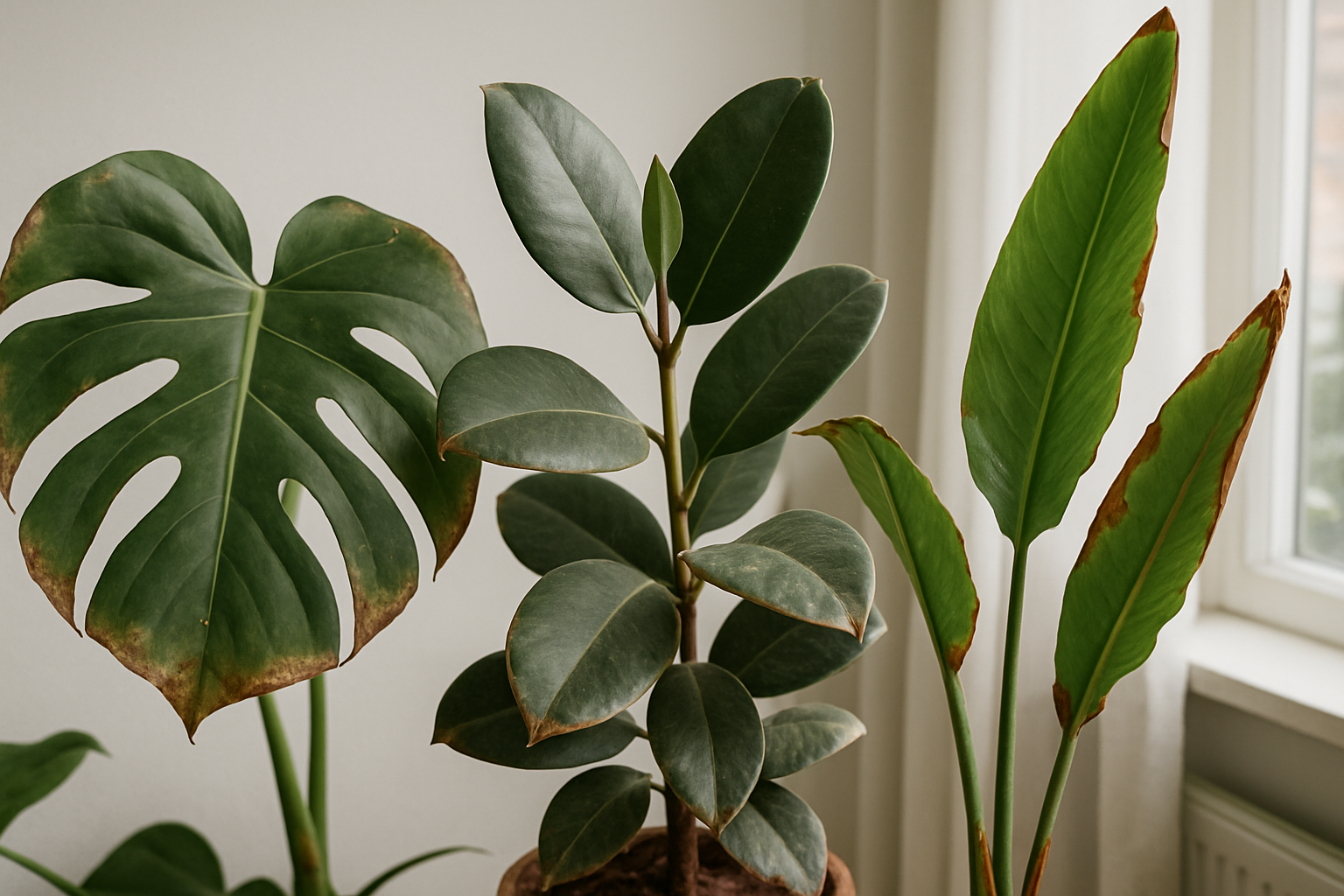
Monstera: Brown Spots and Dry Edges
Monstera plants often develop brown spots or dry, crispy edges on their leaves. This can happen if the soil dries out too much between waterings, or if the plant is exposed to cold drafts or direct sunlight. Sometimes, older leaves naturally turn brown as they age. If you notice brown patches in the middle of the leaf, check for inconsistent watering or sudden temperature changes.
Ficus: Brown Tips from Dry Air
Ficus species, such as the rubber plant or fiddle leaf fig, are sensitive to dry indoor air. Brown tips or edges are often a sign that humidity is too low, especially in winter when heating is on. Overwatering or letting the soil stay soggy can also cause leaf edges to brown and curl. Always check the top few centimeters of soil before watering again.
Strelitzia: Splits and Brown Leaf Margins
Strelitzia (bird of paradise) leaves are naturally prone to splitting, but brown margins or tips can indicate underwatering or exposure to strong sunlight. These plants like bright light but can develop brown edges if the air is too dry or if they are watered irregularly. Occasional brown spots on older leaves are normal as the plant grows.
General Recognition Tips
- Check if brown areas are limited to older leaves—this is often natural aging.
- Look for patterns: dry, crispy edges usually mean low humidity or underwatering; soft, dark spots may point to overwatering.
- Consider recent changes in location, watering, or temperature.
- Inspect the soil moisture with your finger before making adjustments.
Related advice
Frequently Asked Questions
- Are brown edges on monstera leaves normal?
- Occasional brown edges or spots on monstera leaves are common, especially on older leaves or after a period of dryness. If new leaves are consistently affected, check your watering routine and avoid cold drafts.
- What causes brown tips on ficus leaves?
- Brown tips on ficus leaves are often caused by dry indoor air or irregular watering. Try to keep humidity moderate and water only when the top layer of soil feels dry to the touch.
- How can I recognize stress in houseplants?
- Signs of stress include brown or yellowing leaf edges, leaf drop, and slowed growth. Check for changes in watering, light, or temperature, and inspect the soil for dryness or excess moisture.
Introgreen Plantcoach
Plant advice and finder
Get help with plant care, plant problems and pests, or find suitable plants from the Introgreen assortment.