
Passionflower

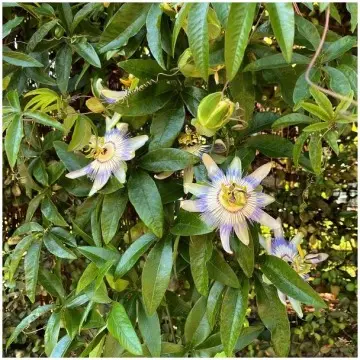
Passionflower: a tropical star in your garden!
Looking for a climber that immediately steals the show? The passionflower does exactly that! With its striking flowers it almost looks like a natural work of art. And the best part? There are many different varieties – from classic purple to exotic color combinations.
- Spectacular flowers
- Vigorous grower and ideal climber
- Also popular with bees and other insects
A plant that gives a little holiday feeling every day in your garden or on your balcony. Which variety will you choose?
-
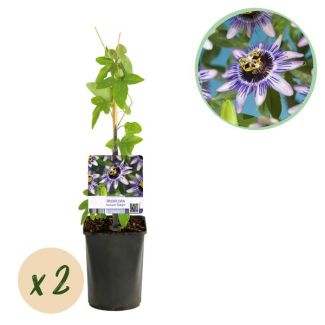 2 Pieces Passion Flower Purple-WhitePassiflora Damsels Delight€28.95 As low as €26.06
 -
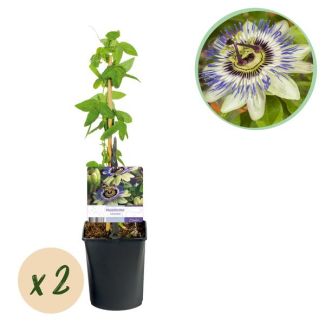 2 Pieces Passion Flower Blue-White/GreenPassiflora caerulea€28.95 As low as €26.06
 -
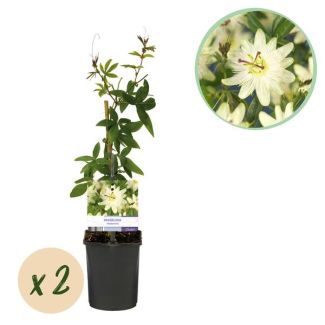 2 Pieces White PassionflowerPassiflora Avalanche€28.95 As low as €26.06
 -
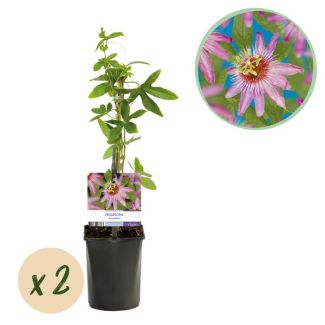 2 Pieces Passion Flower PinkPassiflora Anastasia€28.95 As low as €26.06
 -
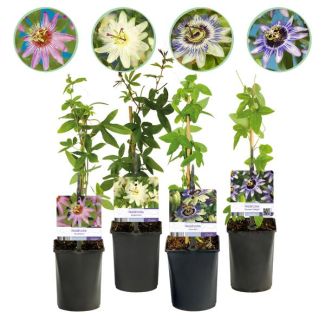 4 Pieces Passion Flower Pink-White-Purple-GreenPassiflora Rainbow€33.95 As low as €30.56
 -
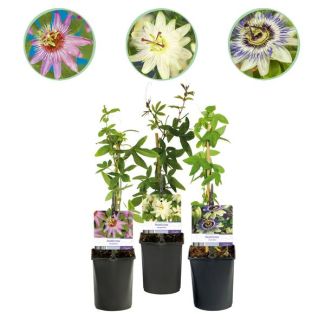 3 Pieces Passionflower 3-Color Pink-White-PurplePassiflora Tricolour€31.50 As low as €28.35


Passionflower — FAQ
How do passionflower types differ, and which one should I choose?
Passionflowers vary by hardiness and growth habit. Some types are more frost-tolerant and suit an open garden; others are tropical and need winter protection or container culture. Growth habit ranges from very vigorous climbers for pergolas and screens to more compact forms suitable for pots and balconies. Choose a hardy type if your garden regularly freezes, choose compact types for limited space or containers, and choose vigorous growers when you want fast screening or a large floral display.
What standplaats and support do passionflowers need — can they grow in a pot or on a pergola?
They prefer a sunny to partly shaded spot with some shelter from cold winds. For pergolas, trellises or lattices, use strong supports and allow space for 2–6 m of upward growth depending on the variety. In containers choose larger pots so the root ball stays moist and nutrients last longer; container plants can be moved indoors or to a sheltered spot in winter if the variety is tender.
How should I prune and feed passionflowers to improve flowering?
Prune annually to shape and to encourage fresh flowering wood: remove weak or crossing stems and cut back after the main flowering flush so new shoots can develop. Feed with a balanced liquid or slow-release fertilizer during the growing season and keep the soil consistently moist but well-drained. For tender types, reduce water in winter and provide frost protection or lift into a frost-free place.
How can I use colour and growth habit to create the best visual effect in the garden or on a balcony?
Match colour groups (white, purple, pink, blue and bi-colours) to the setting: bright or contrasting colours work well against an evergreen backdrop, while paler tones suit relaxed, cottage-style schemes. Mix compact and vigorous types to stagger bloom and lengthen display. Train vines along a focal trellis, over seating, or combine with structural shrubs and grasses for layered texture; avoid letting vigorous climbers overgrow delicate façades or gutters.