
Planter box
-
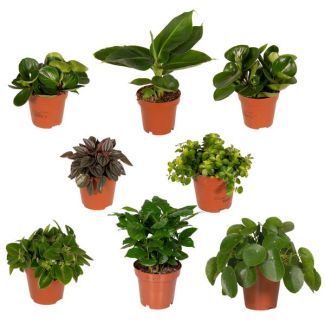 Surprise Box; 8 Pieces Green Plant MixGroene planten€38.95 As low as €35.06


Plant box — Frequently asked questions
How do the different plant boxes differ, and which should I choose?
Plant boxes are assembled for different needs: "pet‑friendly" boxes contain non‑toxic houseplants suitable for homes with cats or dogs; "shade" boxes feature species that tolerate low or indirect light; "low‑maintenance" boxes focus on drought‑tolerant, slow‑growing plants; mixed or "popular" boxes combine a variety of growth habits and leaf textures. Choose a pet‑friendly box if you have animals, a shade box for north‑facing rooms or bathrooms, and a low‑maintenance box if you travel or prefer minimal watering and upkeep.
What space and light do plant boxes need — how do I check they will fit?
Check the pot diameter and expected height: boxes commonly include plants in pots roughly 12–21 cm Ø and heights from about 20 up to 90 cm. For small desks or shelves choose boxes with compact plants and pot Ø ≈12 cm; for floor placement or a visual focal point choose taller specimens. Match light needs to the location: bright, indirect light suits many tropical houseplants; low‑light boxes are made for darker corners. Measure available width and height (including decorative pot or basket) before ordering.
How should I care for a plant box so the plants thrive together?
Treat each plant according to its needs and avoid the common mistake of applying one watering schedule to all. Grouped sets often combine plants with similar light and water needs; if kept in one tray or decorative pot, ensure drainage and avoid waterlogging. Check soil moisture before watering (finger test 2–4 cm). Drought‑tolerant plants (e.g., ZZ, snake‑type, some dracaenas) need much less frequent water than thirstier tropicals—water less rather than more. Repot when roots fill the pot or after 6–18 months into a slightly larger container with fresh potting mix; feed lightly during the growing season. Remove yellow leaves and wipe dusty foliage to maintain health.
How can I arrange and style a plant box for the best visual effect?
Balance heights and leaf shapes: use taller architectural plants at the back, mid‑height textured foliage in the middle, and compact or trailing plants at the front or edges. Contrast leaf color and texture (glossy versus matte, large versus fine leaves) for depth. If the box arrives without a decorative pot, choose one with drainage or use a liner to avoid root rot. Avoid overcrowding—leave space for growth and airflow—and rotate the box periodically so plants grow evenly.