
First Aid for Brown Leaves and Edges
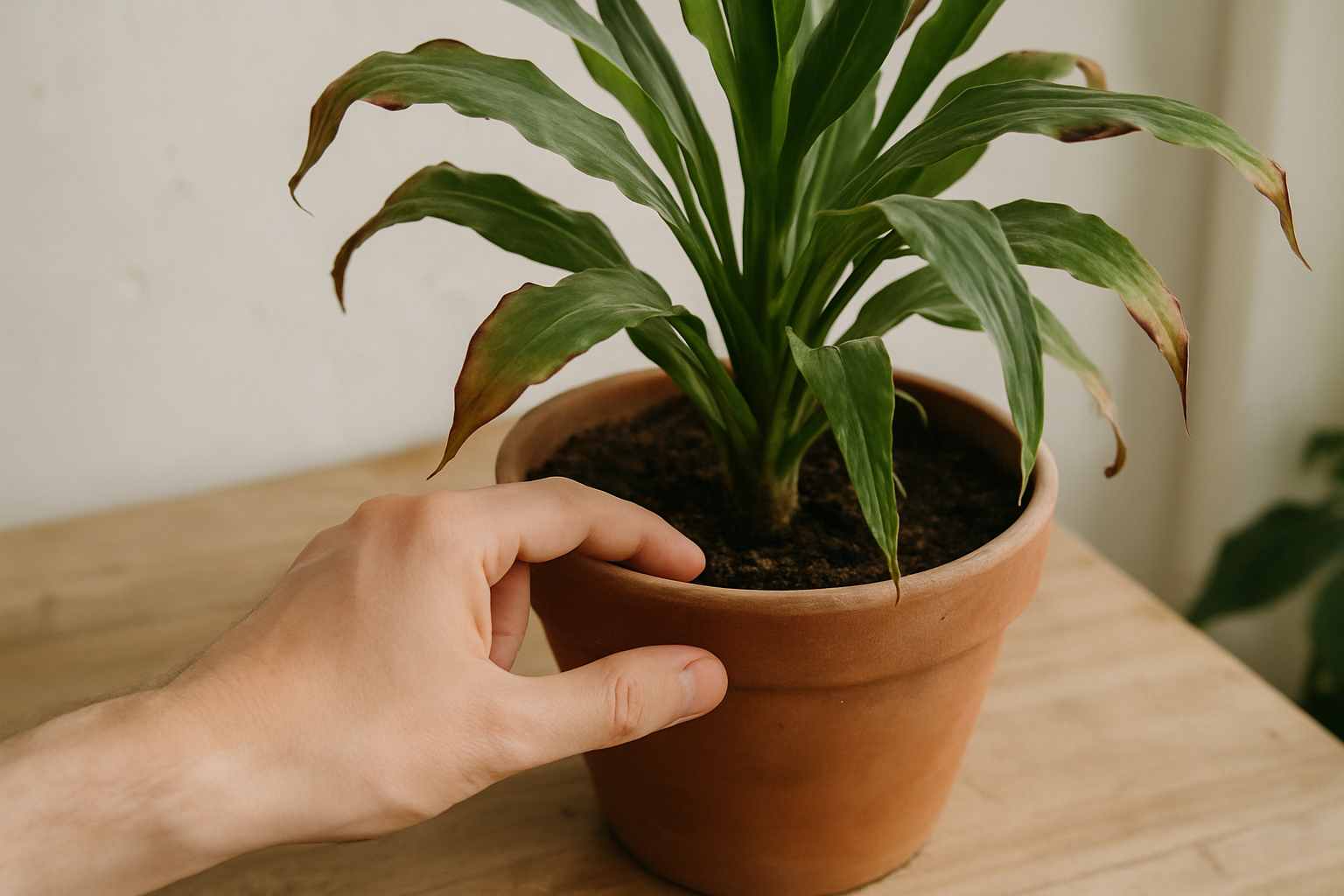
Noticing brown leaves, tips, or dry edges on your plant can be worrying, but most of the time, a calm and practical approach is best. Here’s a step-by-step guide to help you stabilize your plant and address the most common causes.
Step 1: Stabilize the Plant's Location
Keep your plant in its current spot for now. Avoid moving it to a new location or changing light conditions suddenly, as this can add extra stress. Make sure the plant is not in a draft, right next to a radiator, or in direct hot sunlight.
Step 2: Check the Soil and Drainage
Gently press your finger about 2–3 cm into the soil. If it feels very dry, your plant may need water. If it feels soggy or smells musty, drainage could be an issue. Make sure excess water can drain away and that the pot is not standing in water.
Step 3: Inspect for Root Problems
If the plant’s condition is not improving, carefully slide the plant out of its pot to check the roots. Healthy roots are usually white or light tan and firm. If you see dark, mushy, or foul-smelling roots, root rot may be present. Remove any affected roots with clean hands and let the plant dry slightly before repotting.
Step 4: Avoid Overcorrecting
Try not to make too many changes at once. Overwatering, moving the plant, or adding fertilizer all at once can make things worse. Focus on one adjustment at a time and give your plant a chance to respond.
Step 5: When to Wait and Observe
After making initial adjustments, observe your plant for at least one to two weeks. New brown spots may still appear on older leaves, but focus on the condition of new growth. If the problem continues or spreads quickly, check for other causes or consider seeking further advice.
Related advice
Frequently Asked Questions
- Should I water immediately if I see brown edges?
- Not always. First, check if the soil is dry before watering. Brown edges can be caused by both underwatering and overwatering, so it's important to assess the soil moisture before taking action.
- Does repotting help with brown leaves?
- Repotting can help if the roots are damaged or the soil is compacted and not draining well. However, repotting is stressful for a plant, so only do this if you suspect root problems or poor drainage.
- How long does it take for a plant to recover after first aid?
- Visible improvement can take one to several weeks, depending on the plant and the cause. New healthy growth is a good sign. Old brown spots usually do not disappear, but new leaves should look healthier if the problem is resolved.
Introgreen Plantcoach
Plant advice and finder
Get help with plant care, plant problems and pests, or find suitable plants from the Introgreen assortment.