
When Should You Worry About Brown Leaves?
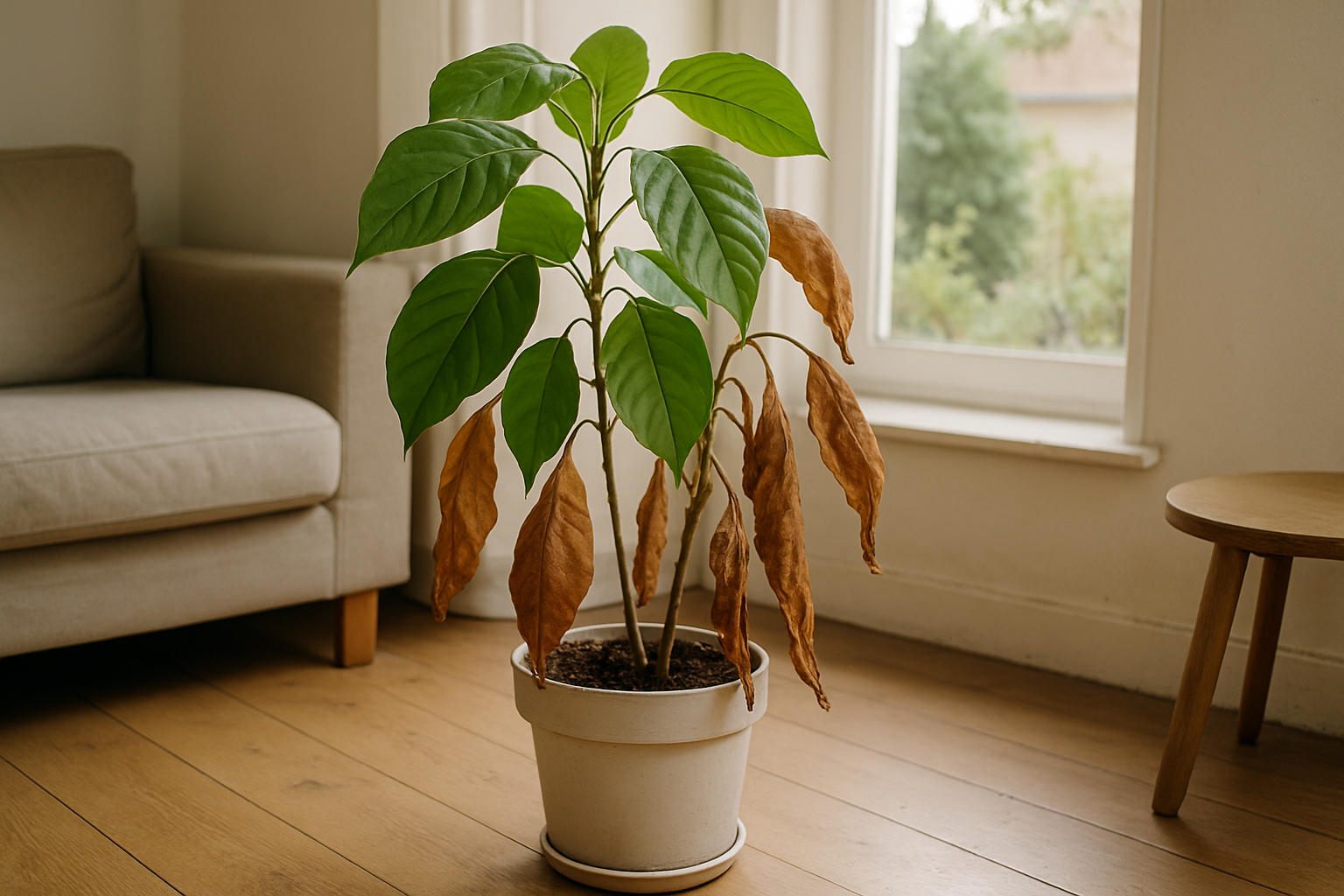
Normal Ageing vs. a Problem
It’s natural for older leaves to turn brown and die off as part of a plant’s life cycle. This usually happens to the lowest or oldest leaves first, while new growth remains healthy and green. If only a few older leaves are affected and the rest of the plant looks vigorous, there’s usually no need to worry.
Signs of Serious Damage
- Rapid spreading: If brown spots or edges appear quickly on many leaves, this may indicate a problem with water, light, or disease.
- Soft, mushy, or blackened areas: These can be signs of rot or severe root issues, especially if accompanied by a foul smell.
- Leaf drop: If your plant is losing many leaves at once, especially new or healthy-looking ones, it may be stressed or sick.
- Wilting despite moist soil: Persistent wilting even when the soil is not dry can point to root damage or overwatering.
- Brown edges on new growth: When new leaves emerge already damaged, the underlying issue may be ongoing.
When to Seek Professional Help?
If you notice any of the above warning signs and simple adjustments (like changing watering habits or moving the plant) don’t help, it may be time to consult a plant expert or local nursery. This is especially important if you suspect pests, fungal infections, or if the plant is valuable or rare.
What If the Problem Keeps Returning?
Recurring brown leaves can be frustrating. Double-check the basics: light, water, humidity, and drainage. Sometimes, environmental factors like dry indoor air or repeated drought outdoors can cause ongoing issues. If you’ve tried several adjustments and the problem persists, consider whether the plant’s location or care routine is suitable for its species. In some cases, replacing the plant or choosing a more resilient variety may be the best option.
Related advice
Frequently Asked Questions
- Are brown leaves always a sign of disease?
- No, brown leaves are not always caused by disease. They can result from natural ageing, water stress, low humidity, or environmental factors. Disease is only one possible cause, and usually other symptoms like spots, mold, or rapid decline are present if disease is involved.
- When is it time to replace a plant?
- If a plant has lost most of its leaves, shows no new growth for a long period, or has severe root rot that cannot be corrected, it may be time to consider replacing it. Sometimes, starting fresh with a healthy plant is the most practical solution.
- Can a plant fully recover from severe damage?
- Recovery depends on the extent of the damage and the plant species. If the roots and some healthy leaves remain, many plants can bounce back with proper care. However, if most of the plant is brown and dry, or the stem is soft and mushy, full recovery is unlikely.
Introgreen Plantcoach
Plant advice and finder
Get help with plant care, plant problems and pests, or find suitable plants from the Introgreen assortment.