
Causes of Problems After Repotting or Moving Plants
Repotting or moving a plant is a big change, and it’s not unusual for your plant to show some stress afterwards. Understanding what’s happening can help you respond calmly and give your plant the best chance to recover. Below, we explain the most common causes of symptoms like drooping, leaf loss, yellowing, or a sudden stop in growth after repotting or relocating your plant—whether it’s indoors or outdoors.
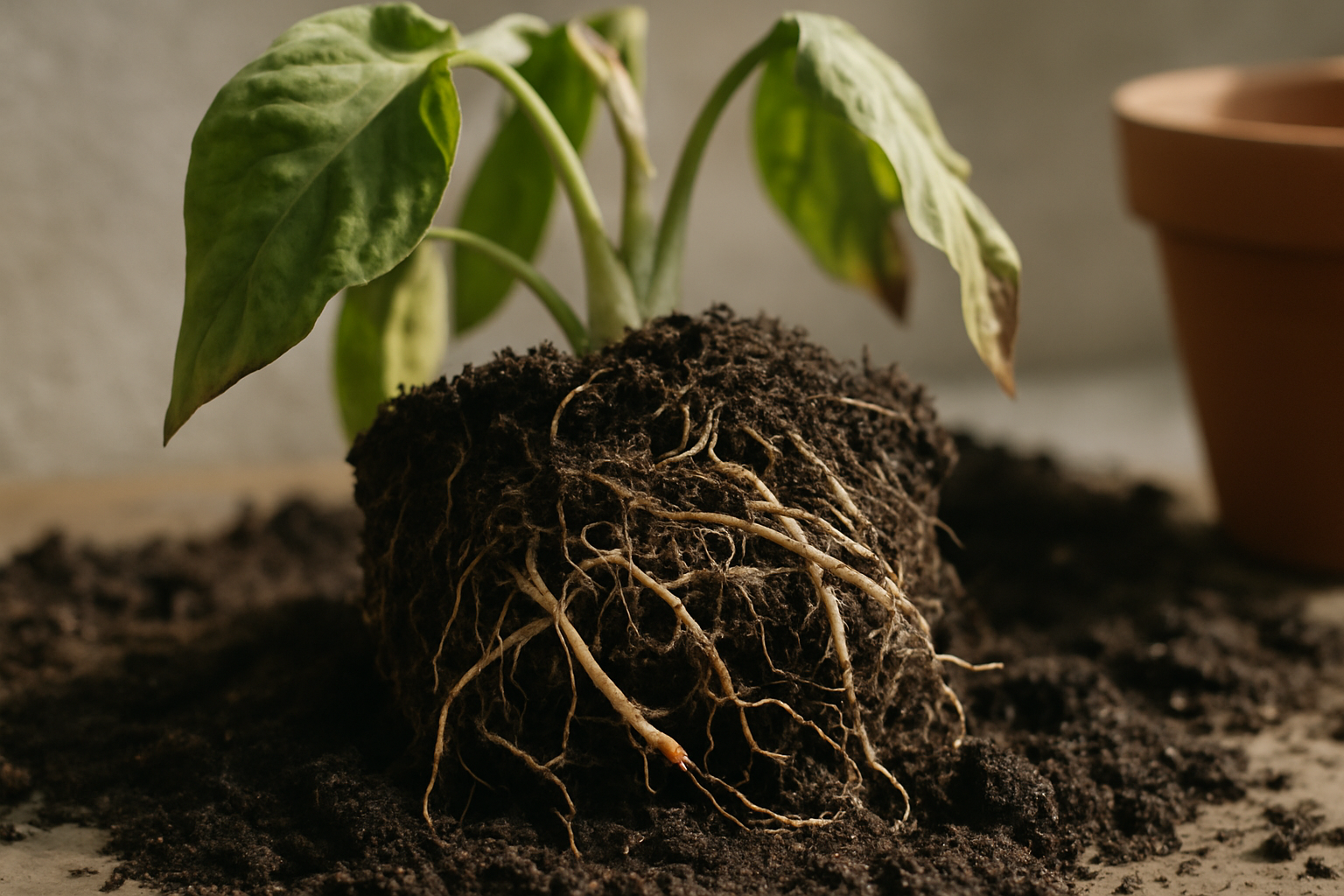
Typical Stress Reactions in Plants
After repotting or moving, many plants react with:
- Drooping or limp leaves
- Yellowing or browning of older leaves
- Leaf drop, especially in sensitive species
- Temporary halt in new growth
These symptoms are usually a sign of stress, not permanent damage. Most plants recover with time and gentle care.
Indoor Plants: Common Causes
- Root disturbance: Even gentle repotting can break fine roots, making it harder for the plant to take up water for a while.
- Sudden change in environment: Moving a plant to a new spot may expose it to different light, temperature, or humidity.
- Overwatering or underwatering: Fresh soil can hold water differently. Overwatering is a common mistake after repotting.
- Pot size: A pot that’s much larger than before can cause the soil to stay wet for too long, stressing the roots.
- Soil type: Using soil that drains poorly or is too dense for the species can lead to root stress or rot.
Outdoor Plants: Common Causes
- Transplant shock: Outdoor plants, especially trees and shrubs, may lose leaves or stop growing after being moved.
- Root damage: Digging up and replanting often breaks larger roots, slowing water uptake.
- Exposure: New locations may be windier, sunnier, or colder than the previous spot, increasing stress.
- Soil mismatch: If the new soil is much heavier or lighter than before, roots may struggle to adjust.
Examples: Olive Tree, Ficus, Monstera, Lavender
- Olive tree: May drop many leaves after repotting, especially if roots are disturbed or the potting mix is too wet.
- Ficus: Known for dropping leaves after any change, including a new pot or location.
- Monstera: Can develop yellow or limp leaves if roots are damaged or soil stays too wet.
- Lavender: Sensitive to root disturbance and heavy, wet soil after replanting.
For more specific examples, see our pages on indoor plants and outdoor plants after repotting or moving.
What Happens in the Roots?
Repotting almost always disturbs the root system. Fine roots, which absorb most water and nutrients, are easily broken or exposed to air. This temporarily reduces the plant’s ability to take up water, leading to drooping or yellowing leaves. If the soil stays too wet, damaged roots may rot, causing more severe symptoms. Most plants regrow roots and recover, but this can take several weeks.
Related topics
Frequently Asked Questions
- Can a pot that is too large cause problems?
- Yes, a pot that is much larger than the previous one can hold excess moisture, making it harder for roots to access air and increasing the risk of root rot. Choose a pot only slightly bigger than the old one for most plants.
- What happens if roots are damaged during repotting?
- Damaged roots may temporarily reduce the plant’s ability to take up water, leading to drooping or yellowing leaves. Most healthy plants regrow roots over time, but recovery can take several weeks.
- Is using the wrong potting soil a problem?
- Yes, using soil that is too dense or retains too much water can stress roots and increase the risk of rot. It’s important to match the soil type to your plant’s needs.
- Can moving a plant to a new spot cause stress?
- Absolutely. Changes in light, temperature, or humidity can all stress a plant, especially if the new spot is much brighter, darker, colder, or drier than before.
- How do I recognize root rot after repotting?
- Signs of root rot include a persistent foul smell from the soil, black or mushy roots (if inspected), and leaves that continue to yellow or wilt despite careful watering. If you suspect root rot, check the roots and remove any soft, dark sections.
Introgreen Plantcoach
Plant advice and finder
Get help with plant care, plant problems and pests, or find suitable plants from the Introgreen assortment.