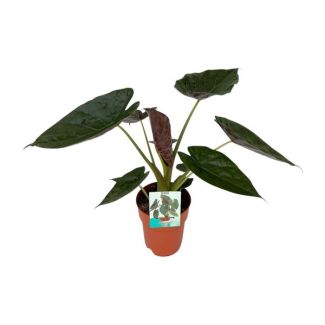
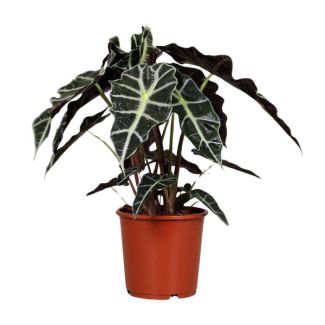
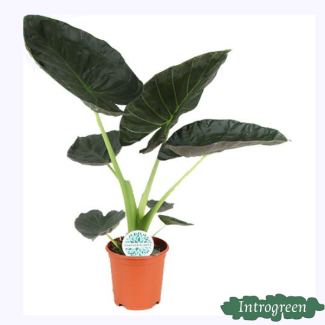
The Alocasia Zebrina is one of the most striking and beloved Alocasia species due to its beautiful leaf pattern and characteristic stems. The plant is also known as the Zebra Plant, a name that refers to the distinctive white to light yellow stripes that twist along the dark brown stems, which strongly resemble the pattern of a zebra. This tropical plant is favored by plant collectors for its exotic appearance and elegant look.
Some characteristics and care tips for the Alocasia zebrina are;
Leaves: The leaves of the Alocasia zebrina are large, glossy, and heart-shaped or arrow-shaped, with a striking dark green color. The leaves can grow up to 30-50 cm long and have a beautiful contrast between the veins and the leaf surface.
The veins of the leaves are clearly visible and form a pronounced pattern, emphasizing the elegance of the plant. The leaf itself has a smooth texture and appears leathery, which contributes to the tropical look of the plant.
The top of the leaves is usually dark green, while the underside often has a purple hue, which also adds to the visual effect.
Stems and Growth: The stems (petioles) of the Alocasia zebrina are what give the plant its name. They have a striking zebra-like pattern, with dark brown or gray-brown color striped with light, yellowish or white stripes, making them strongly resemble the stripes of a zebra.
The stems are thick and sturdy, contributing to the robust appearance of the plant. This makes the plant not only visually appealing but also relatively resistant to breakage.
The Alocasia zebrina can reach a height of 60 cm to 1 meter, depending on the environmental conditions. The leaves grow straight up, giving the plant a stately appearance.
Flowers: Like most Alocasia species, the flowering of the Alocasia zebrina is not particularly impressive and is often overlooked. The flowers consist of a spadix (flower stalk) surrounded by a spatha (flower bract). Flowering often occurs in the summer, but this usually happens rarely in indoor conditions.
The flowers are small and simple and are not often seen, as the beauty of the plant mainly comes from the leaves.
Origin and Species: The Alocasia zebrina originates from the tropical regions of Southeast Asia, mainly Indonesia and the Philippines. It naturally grows in humid, tropical rainforests and is a moisture-loving plant.
The zebrina is a popular choice for houseplants and tropical gardens due to its dramatic appearance and ability to thrive well in indoor conditions.
Light: The Alocasia zebrina needs bright, indirect light to grow well. Too much direct sunlight can burn the leaves, especially the lighter spots on the leaves. Place the plant in a location with filtered light.
If the plant receives too little light, growth may slow down, and the leaves may become smaller and less vibrant. A spot close to a window is ideal, but ensure that the light is not too intense.
Temperature: The Alocasia zebrina does best in warm temperatures, ideally between 18°C and 25°C. This plant is a tropical species and does not tolerate cold well.
Avoid places where the temperature drops below 15°C, as cold can damage the plant. It is also important to keep the plant away from cold drafts, such as those from air conditioning or drafty windows.
Watering: The Alocasia zebrina needs regular watering, but it is important to let the soil dry out slightly between waterings. Too much water can cause root rot, while the plant does not grow well if the soil remains too dry.
The best way to check if the plant needs water is to touch the top layer of soil in the pot. If it feels dry, it’s time to water. In winter, the plant needs less water as growth slows down.
Humidity: The Alocasia zebrina loves high humidity. In nature, this plant is found in moist environments, so in a home with low humidity, the leaves may start to burn or develop brown edges.
A humidity level of 50-60% or higher is ideal. To increase humidity, you can regularly mist the plant with water, use a humidifier, or place the plant on a pebble tray with water to promote evaporation.
Soil: Ensure well-draining potting soil. A mix of potting soil, perlite, and coconut coir works well as it ensures that the roots get enough air and that water drains well.
Make sure the pot in which the Alocasia zebrina is placed has sufficient drainage holes. This prevents excess water from accumulating and causing root rot.
Fertilizing: During the growing season (spring and summer), you can fertilize the Alocasia zebrina monthly with a balanced liquid fertilizer for houseplants. Use a diluted solution of fertilizer to avoid over-fertilization.
In autumn and winter, the plant needs less fertilization as growth slows down.
Pruning: Remove dead or damaged leaves to keep the plant looking tidy and to prevent diseases. Prune the leaves carefully with sharp scissors to ensure a clean cut and to avoid infections.
Is the Alocasia zebrina toxic?
Yes, the Alocasia zebrina is toxic to both humans and pets. Like other Alocasia species, the plant contains oxalates (calcium oxalate crystals), which can be irritating if ingested or if they come into contact with the skin.
The Alocasia zebrina is a beautiful, tropical plant that is relatively easy to care for if the right conditions are provided. With the right care, this plant will surely stand out in your home!