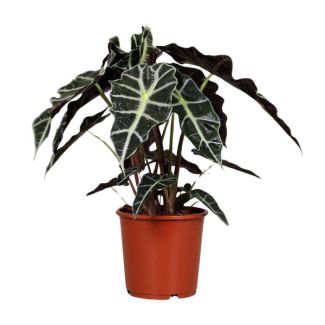
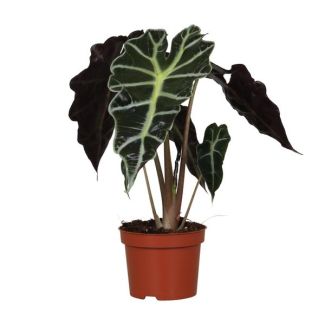
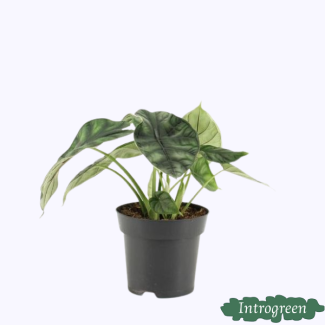
Alocasia Wentii is a relatively lesser-known but still very attractive species within the Alocasia genus. This tropical plant is known for its beautiful heart-shaped leaves, which have an elegant appearance due to the combination of deep green shades and intense veins. The underside of the leaf shows a surprising purplish tint. Alocasia Wentii is often praised for its versatility and the dramatic look it can add to an interior. It is a species that thrives in tropical conditions, both indoors and in greenhouses, provided the right care is given.
Characteristics of the Alocasia Wentii:
Leaves: The leaves of the Alocasia Wentii are the most striking feature. They are elongated, lance-shaped (tapering to a point) and have a deep green color, sometimes with a purplish undertone. This makes the plant visually distinctive and a bit "cooler" compared to other Alocasia species, which can often be bright green or blackish.
The leaves have a leathery texture, meaning they are firm and slightly glossy, and the veins often run in a striking pattern, giving the plant a dramatic, graphic appearance.
The leaf size typically ranges from 20 to 40 cm long and 10-15 cm wide, depending on the age and growing conditions of the plant. The leaves grow on long, sturdy stems that often display a purplish tint.
Stems and Growth: The Alocasia Wentii has an upright growth habit, with sturdy stems rising from a tuberous root system. This provides stable, upright growth, ideal for indoor environments where space may be limited.
The plant can reach between 60 and 90 cm in optimal conditions, although it often remains smaller in an indoor environment.
Flowers: Like other Alocasia species, the Alocasia Wentii produces small flowers in the form of a spadix (flower stalk) surrounded by a spatha (flower bract). The flowers are generally not the main attraction of this plant, and they are often not even seen in indoor conditions. Alocasia’s are usually appreciated for their leaves rather than their blooms.
Origin and Species: Alocasia Wentii originates from the tropics of Asia and is often found in moist, shady areas such as rainforests. It is a relatively less common species compared to, for example, Alocasia Polly or Alocasia Amazonica, but it has a loyal following of enthusiasts due to its unique appearance.
Light: Alocasia Wentii requires bright, indirect light to grow well. It is important to keep the plant out of direct sunlight, as this can burn the leaves, resulting in brownish spots or wilting.
However, too little light can weaken the plant and lead to slow growth and smaller leaves. Therefore, place the plant in a location where there is sufficient light but no direct sunlight.
Temperature: The ideal temperature for the Alocasia Wentii is between 18°C and 25°C. The plant loves warm, tropical environments and does not fare well in cold during the winter. Ensure that the temperature does not drop below 15°C, as cold air can slow growth and cause damage to the leaves.
It is also important to avoid drafts. Cold air currents can stress the plant, resulting in yellow or wilting leaves.
Watering: The Alocasia Wentii has a moderate water requirement, but the soil should not remain too wet. This can lead to root rot. It is important to allow the top layer of soil to dry out between waterings, but not to dry out completely, as this can stress the plant.
During the growing season (spring and summer), the plant will need more water, while in the dormant period (autumn and winter), the water requirement decreases, so adjust watering according to the seasons.
Humidity: Alocasia Wentii is a tropical plant and loves high humidity. A humidity level of 60% or more is ideal. If the air is too dry, the edges of the leaves can turn brown, and the plant can generally weaken.
To increase humidity, you can mist the plant regularly (with lukewarm water) or use a humidifier. It can also help to place the plant on a stone tray with water, so that evaporation increases the humidity in the surrounding area.
Soil: Alocasia Wentii requires well-draining, airy potting soil. A mixture of potting soil, perlite, and coconut fibers or a cactus or succulent soil can work well, as it provides a good balance of moisture retention and drainage.
Ensure that the pot in which the plant is placed has sufficient drainage holes so that excess water can drain away properly.
Fertilization: During the growing seasons (spring and summer), the Alocasia Wentii can be fertilized with a balanced liquid fertilizer to promote healthy growth. Fertilize the plant once a month or according to the instructions on the fertilizer label.
In autumn and winter, when the plant is in a dormant period, fertilization can be reduced or even stopped entirely, as the plant requires fewer nutrients.
Pruning: Alocasia Wentii requires little pruning, except for removing wilted or damaged leaves. This helps the plant look tidier and ensures that energy is directed towards healthy growth.
Use a sharp and clean knife or scissors to prune and avoid infection by not allowing tools to come into contact with other plants.
Is the Alocasia Wentii toxic?
Yes, the Alocasia Wentii is toxic to both humans and pets. Like other Alocasia species, the plant contains oxalates (calcium oxalate crystals), which can be irritating if ingested or if they come into contact with the skin. It can lead to itching, swelling, or burning in the mouth, throat, and on the skin, and if ingested, it can cause gastrointestinal issues such as nausea, vomiting, or diarrhea.
Wentii is an excellent choice for plant lovers looking for a tropical, visually impressive plant for indoors. With the right care, this plant will thrive and provide your home with beautiful, dramatic leaves that attract attention!