
Plant Stress After Moving or Repotting
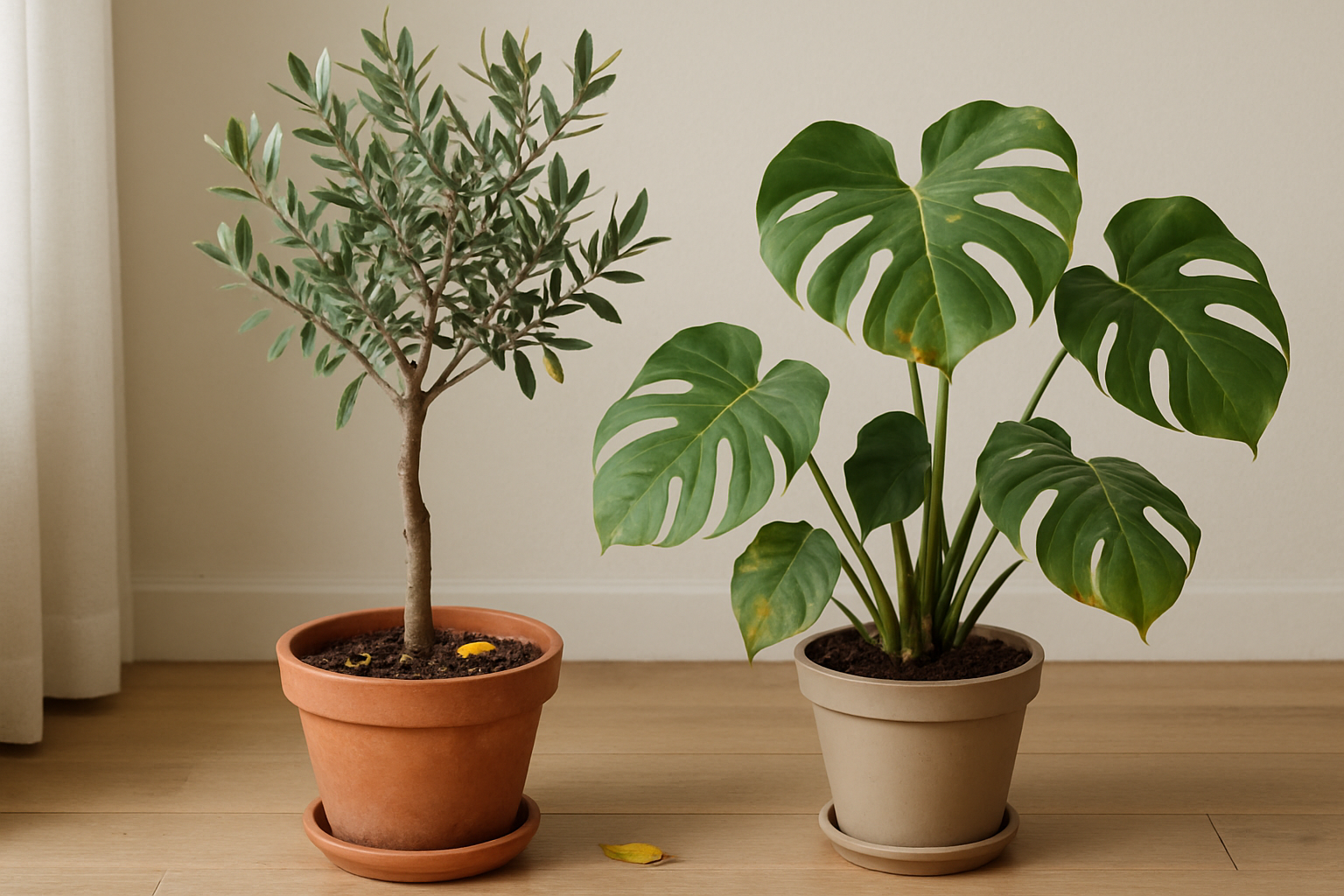
What Is Plant Stress After Moving?
Plants can react strongly to changes in their environment, such as moving to a new spot, repotting, or transitioning from indoors to outdoors (or vice versa). This stress is a natural response to changes in light, temperature, humidity, or root disturbance. Both houseplants and outdoor potted plants can show signs of stress after being moved.
Common Symptoms
- Leaf drop (sometimes suddenly, especially with ficus or olive trees)
- Wilting or limp leaves (often seen in monstera, strelitzia, or lavender)
- Yellowing or browning of leaf edges
- Slow growth or no new shoots
- Discoloration or spots on leaves
These symptoms usually appear within a few days to two weeks after moving or repotting.
Quick First Aid
- Keep the plant in a stable spot with suitable light (avoid direct sun for most houseplants right after moving).
- Check the soil moisture: water only if the top 2-3 cm of soil feels dry to the touch.
- Ensure pots have drainage holes and no standing water at the bottom.
- Remove dead or fully yellowed leaves, but leave any that are only partly discolored.
- Do not fertilize or repot again immediately; let the plant settle for a few weeks.
Most plants recover on their own if left undisturbed and cared for gently.
Examples: Indoor and Outdoor Plants
- Olive tree: Often drops leaves after being moved indoors or outdoors, especially in autumn or spring.
- Ficus: Sensitive to drafts and light changes; leaf drop is common after a move.
- Monstera: May develop limp or yellow leaves after repotting or a new location.
- Citrus: Yellowing leaves can follow a sudden temperature change.
- Lavender: Wilting or drooping after repotting, especially if roots are disturbed.
- Bay laurel: Brown leaf edges can result from wind or sudden exposure.
- Strelitzia: Brown tips and drooping leaves after moving or repotting.
For more detailed examples and care tips, see:
When Should You Worry?
Some stress is normal and temporary. However, if your plant continues to lose leaves for more than three weeks, shows no new growth for a full season, or develops widespread brown or black spots, it may need extra attention. For more on when to take action, visit When to worry about plant stress?
Further Reading
Frequently Asked Questions
- Why does my plant lose leaves after being moved?
- Leaf loss is a common stress response to changes in light, temperature, or humidity. Many plants, like ficus and olive trees, shed leaves to adjust to new conditions. As long as new leaves appear within a few weeks, this is usually not a cause for concern.
- How long does it take for a plant to recover from stress?
- Most plants start to recover within two to four weeks if left in a stable spot and cared for gently. Some, like olive trees or citrus, may take a full season to fully regrow leaves.
- Should I water my plant more after moving it?
- No, avoid overwatering. Only water when the top 2-3 cm of soil feels dry. Overwatering can make stress worse, especially if roots are damaged.
- Is it normal for an olive tree to lose leaves after repotting?
- Yes, olive trees often drop some leaves after being repotted or moved, especially if roots are disturbed. As long as the branches remain flexible and new buds appear, the tree is likely to recover.
- What should I do if my plant has limp leaves after moving to a new spot?
- Check the soil moisture first. If the soil is dry, water gently. If it is wet, let it dry out before watering again. Keep the plant out of direct drafts and avoid moving it again for a while.
- Is plant-stress-na-verplaatsen toxic to dogs and cats?
- plant-stress-na-verplaatsen is generally considered toxic to dogs and cats. Its sap can irritate the mouth, skin or stomach if leaves are chewed or swallowed. Keep the plant out of reach of pets and contact a veterinarian if symptoms occur or if you are unsure.
Introgreen Plantcoach
Plant advice and finder
Get help with plant care, plant problems and pests, or find suitable plants from the Introgreen assortment.