
Yellow Leaves on Houseplants: Examples
Noticing yellow leaves on your houseplant can be unsettling, but it’s a common issue that often has a clear cause. Here, we’ll walk through some recognizable examples with popular indoor plants, so you can better understand what’s happening and what you might do next.
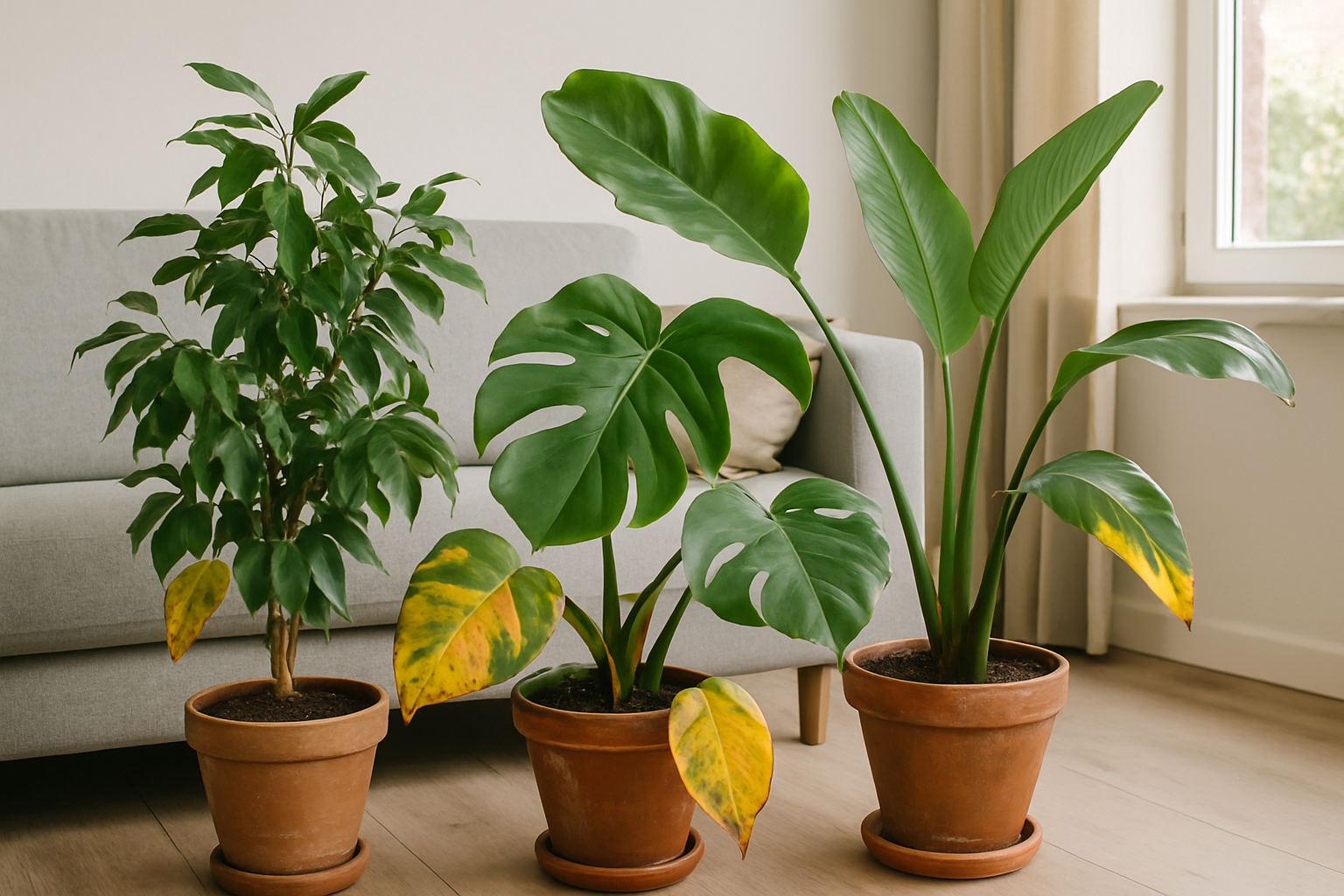
Ficus: Yellow Lower Leaves
It’s quite common for ficus plants to develop yellow leaves, especially on the lower parts of the plant. This can happen if the plant is adjusting to a new spot, or if it’s getting too much or too little water. If only the oldest, lowest leaves are yellowing and dropping, this is often a normal part of the plant’s growth cycle. However, if many leaves turn yellow at once, check the soil moisture and light levels.
Monstera: Yellow Spots and Leaf Drop
Monsteras can show yellow patches or lose leaves if they’re overwatered or sitting in soggy soil. Sometimes, yellowing starts as small spots before spreading. Make sure the pot drains well and let the top few centimeters of soil dry out before watering again. If the plant is in a dark corner, try moving it to a brighter spot out of direct sun.
Strelitzia: Yellow Edges and Stress
Strelitzia (bird of paradise) often shows yellowing along the edges of its leaves when it’s stressed, for example after repotting or if it’s exposed to cold drafts. Check that the plant isn’t too close to a window in winter, and avoid sudden changes in watering or location. Some yellowing is normal as older leaves age and new ones grow in.
Houseplants in Pots: General Tips
- Always check the soil before watering. If it feels wet, wait a few days.
- Yellow leaves on the bottom are often older leaves naturally dying off.
- If yellowing spreads quickly or affects new growth, review light, water, and possible pests.
- For more on causes and first aid, see our overview of causes and first aid checklist.
More About Yellow Leaves
Frequently Asked Questions
- Is it normal for a ficus to lose leaves?
- Yes, it’s normal for a ficus to shed some older leaves, especially after moving or seasonal changes. If many leaves drop at once or new growth is affected, check for drafts, overwatering, or sudden changes in light.
- What does it mean if only the lower leaves are yellow?
- Yellowing of only the lowest leaves is often just natural aging. If the yellowing moves up the plant or affects new leaves, it may signal a problem with water, light, or nutrients.
- Can a monstera recover from yellow leaves?
- Yes, if the underlying issue (such as overwatering or low light) is corrected, new healthy leaves should appear. The yellowed leaves themselves usually won’t turn green again and can be trimmed if dry.
- Is my houseplant toxic to pets?
- Some houseplants, including ficus, monstera, and strelitzia, can be toxic if eaten by pets. If you suspect your pet has chewed on a plant and is unwell, contact your veterinarian for advice. Always check the specific plant species for pet safety information.
Introgreen Plantcoach
Plant advice and finder
Get help with plant care, plant problems and pests, or find suitable plants from the Introgreen assortment.