
Why Does My Plant Have Yellow Leaves?
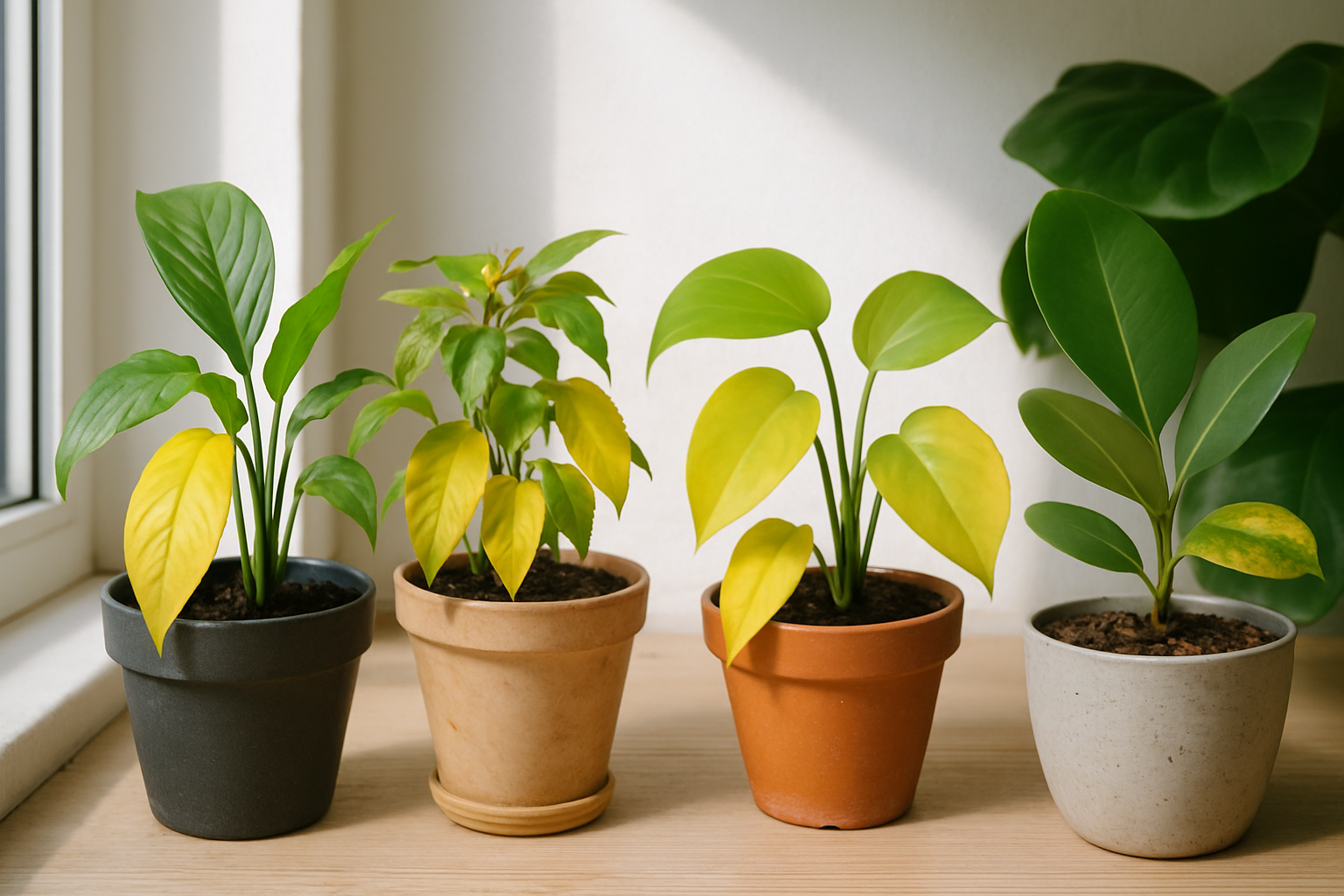
Yellow leaves can be worrying, but they are a common signal that something in your plant's environment needs attention. Whether your plant lives indoors or outdoors, yellowing can have several causes. Below, you'll find the most frequent reasons for yellow leaves, with practical tips to help you diagnose the problem.
Too Much or Too Little Water
Watering issues are the most common reason for yellow leaves. Overwatering often leads to soft, limp yellow leaves, sometimes with brown tips or edges. Underwatering usually causes leaves to turn yellow and dry out, sometimes curling or dropping off. Check the soil: if it's soggy or smells musty, overwatering is likely. If it's bone dry, your plant may be thirsty.
Light and Placement
Plants that get too little light may develop pale yellow leaves, especially on the side furthest from the window. Too much direct sunlight can cause yellow patches or scorched spots. Observe where the yellowing occurs: is it on the side facing away from the light, or on leaves exposed to harsh sun?
Nutrient Deficiency or Excess
Lack of nutrients, especially nitrogen, can cause older leaves to turn yellow while new growth stays green. Over-fertilizing can also stress roots and cause yellowing. If you haven't fed your plant in a while, or if you've recently added a lot of fertilizer, this could be the cause.
Repotting and Stress
Plants may react to repotting, moving, or sudden changes in environment by dropping or yellowing some leaves. This is usually temporary. Give your plant time to adjust and avoid making multiple changes at once.
Root Problems
Compacted, damaged, or rotting roots can prevent your plant from absorbing water and nutrients, leading to yellow leaves. If you suspect root issues (for example, if the plant is wobbly or the soil never dries out), gently check the roots for mushiness or a foul smell.
Pests and Diseases
Insects like spider mites, aphids, or scale can cause yellow spots or patches. Fungal or bacterial diseases may also lead to yellowing, often with spots or a pattern. Check the undersides of leaves and stems for pests, and look for any unusual markings.
Leaf Aging
It's normal for older leaves, especially those at the bottom of the plant, to turn yellow and drop off as part of the natural growth cycle. If only a few lower leaves are affected and new growth looks healthy, this is usually nothing to worry about.
Related advice
Frequently Asked Questions
- How can I tell if my plant is getting too much or too little water?
- Check the soil with your finger. If it feels wet and heavy several days after watering, overwatering is likely. If it feels dry and pulls away from the pot edge, your plant may need more water. Observe the leaves: limp and soft usually means too much water, while dry and crispy points to underwatering.
- Can yellow leaves be caused by too little light?
- Yes, insufficient light often leads to pale, yellowing leaves, especially on the side of the plant furthest from the window. Try moving your plant to a brighter spot, but avoid sudden changes or harsh midday sun.
- What effect does repotting have on leaf color?
- Repotting can temporarily stress a plant, causing some leaves to yellow or drop. This is usually short-lived. Make sure the new pot has good drainage and avoid fertilizing immediately after repotting.
- Which pests can cause yellow leaves?
- Common pests that cause yellowing include spider mites, aphids, and scale insects. Look for tiny webs, sticky residue, or small bumps on leaves and stems. If you suspect pests, isolate the plant and inspect it closely.
Introgreen Plantcoach
Plant advice and finder
Get help with plant care, plant problems and pests, or find suitable plants from the Introgreen assortment.