

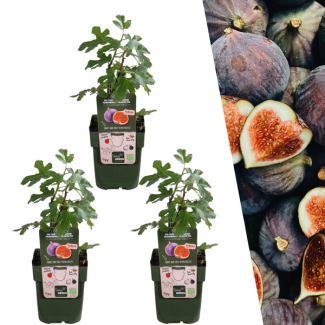
Fig tree – Ficus Panachee | ↕40 cm | Ø15 cm
Fig tree
Ficus Panachee
Frequently Asked Questions
What is the ideal sun exposure for the Fig Tree?
The Fig Tree prefers full sun for optimal growth and fruit production.
How often should I water the Fig Tree?
Water regularly, especially during dry periods and in the first year after planting to establish a strong root system.
Is the Fig Tree toxic to pets?
No, the Fig Tree is non-toxic and safe for both humans and pets.
What type of soil is best for growing the Fig Tree?
Well-draining, fertile soil is ideal. It tolerates calcareous soil and can also grow in slightly acidic to neutral soil.
When is the harvest time for the figs?
Figs are typically harvested from late summer to early autumn, around August to October.
- Buy 2 for €27.85 each and save 7%
- Buy 4 for €26.96 each and save 10%


Details
The Ficus Panachee, also known as Fig Tree.
With its unique, colorful fruits and attractive leaves, the Ficus Panachee is a valuable addition to any garden or edible landscape, both for its aesthetic and practical qualities.
A number of characteristics and care tips for Ficus Panachee are;
Fruits:
Color: Ripe figs are green with yellow stripes, giving them a very decorative appearance. The flesh is pink to red.
Shape: Oval to pear-shaped.
Taste: Sweet and juicy, suitable for fresh consumption and processing into jam, chutney, or dried figs.
Harvest time: Usually in late summer to early autumn (August to October).
Leaves: The color of the leaves is dark green.
They are large and hand-shaped with deep lobes, which is typical for fig trees.
The texture of the leaf is rough on the top and soft hairy on the underside.
Growth habit: The Fig Tree can grow up to 3 to 5 meters tall.
Wide, spreading crown with thick, gnarled branches.
Type: Medium-sized, deciduous tree.
Location: Prefers full sun. The more sun the tree receives, the better the fruit production.
Soil: Well-draining, fertile soil. Tolerates calcareous soil but also grows well in slightly acidic to neutral soil.
Protection: In colder climates, protection against frost is important, for example by wrapping the tree or protecting it with a fleece cloth.
Water: Water regularly, especially during dry periods and in the first year after planting to develop a strong root system.
Pruning: Prune in late winter or early spring to maintain shape, remove dead wood, and stimulate growth. Fig trees can be heavily pruned without damage.
Fertilization: Use a balanced fertilizer in early spring to promote growth and fruit production.
Use:
Garden: Ideal for use in a Mediterranean garden, as a solitary or in a group.
Container: Can also be grown on terraces and patios, especially in colder climates where the tree can be brought indoors in winter.
Edible garden: Suitable for edible gardens and orchards due to the delicious fruits.
Benefits:
Edible Fruits: Producer of delicious, sweet figs.
Decorative Leaves: Large, hand-shaped leaves that give an exotic appearance.
Low Maintenance: Easy to care for and drought-tolerant once established.
Toxicity:
Non-toxic: The fig tree 'Bornholm' is safe for humans and pets. The fruits are edible and the plant itself is not known to be toxic.
More Information
| Titel 2 | Ficus Panachee |
|---|---|
| Plant height | 40 |
| Pot size | 15 |
| Toxic | No |
| Botanical name | Aglaonema |
| Decorative pot | Without pot |
| Delivery time in days | 1 |
| ean | 8721143608435 |
| Quantity in package | 1 |
| verpakking gewicht | 20 g |
Reviews
Write Your Own Review