
First Aid for a Drooping Plant
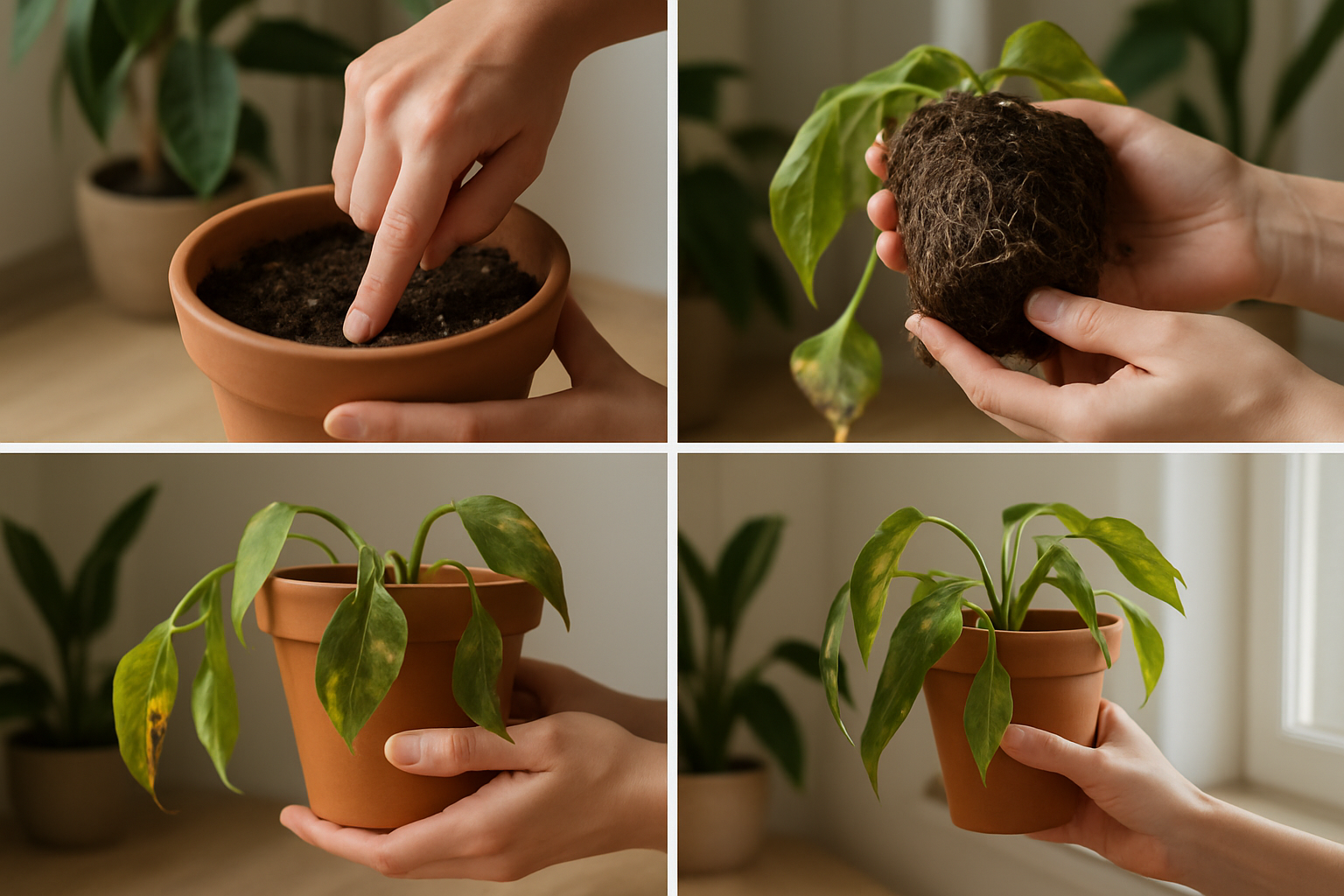
Seeing your plant suddenly droop can be worrying, but with a calm approach and a few simple checks, many plants can bounce back. Here’s a practical step-by-step guide for both indoor and outdoor plants showing signs of limp or wilting leaves.
Step 1: Place the Plant Somewhere Stable
Move the plant out of direct sun, wind, or drafts. Choose a spot with indirect light and stable temperature. This helps reduce stress while you assess the situation.
Step 2: Check the Soil (Moist or Dry?)
Gently press your finger 2–3 cm into the soil. If it feels very dry, the plant may need water. If it feels soggy or smells musty, overwatering or poor drainage could be the cause. For outdoor plants, check if the soil is compacted or waterlogged after rain.
Step 3: Check Drainage and Pot Holes
For potted plants, make sure water can drain freely from the bottom. If water pools in the saucer or the pot feels heavy and wet, empty excess water and ensure drainage holes are clear. For garden plants, look for standing water around the roots.
Step 4: Only Water if Needed
Water only if the soil is dry below the surface. If the soil is already moist or wet, do not add more water—wait until it dries out a bit. For outdoor plants, skip watering after heavy rain.
Step 5: Inspect Roots and Leaves
Carefully lift the plant from its pot if possible. Healthy roots are firm and white or light brown. Mushy, dark, or foul-smelling roots may indicate rot. Remove any dead or mushy roots with clean hands. Check leaves for pests or unusual spots.
Step 6: Avoid Overcorrecting
Don’t rush to repot, fertilize, or prune heavily right away. Too many changes at once can stress the plant further. Focus on stable conditions and gradual recovery.
Step 7: Give the Plant Time to Recover
Most plants need several days to weeks to perk up after drooping. Keep monitoring soil moisture and avoid moving the plant again unless necessary. Be patient—visible improvement can take time.
Related advice
Frequently Asked Questions
- Should I water a drooping plant right away?
- Not always. First, check if the soil is dry below the surface. Only water if it feels dry. If the soil is already moist or wet, wait before watering again.
- How can I check if the roots are healthy?
- Gently remove the plant from its pot and look at the roots. Healthy roots are firm and light-colored. If they are mushy, dark, or smell bad, they may be rotting.
- Can I repot a drooping plant?
- Repotting can help if the plant is rootbound or the soil is waterlogged, but avoid repotting just because the plant is drooping. Too much disturbance can add stress. Only repot if you see clear signs of root problems.
- How long does it take for a drooping plant to recover?
- Recovery can take anywhere from a few days to several weeks, depending on the cause and the plant species. Be patient and avoid making too many changes at once.
- Is slappe-plant toxic to dogs and cats?
- slappe-plant is generally considered toxic to dogs and cats. Its sap can irritate the mouth, skin or stomach if leaves are chewed or swallowed. Keep the plant out of reach of pets and contact a veterinarian if symptoms occur or if you are unsure.
Introgreen Plantcoach
Plant advice and finder
Get help with plant care, plant problems and pests, or find suitable plants from the Introgreen assortment.