
Causes of a Drooping Plant
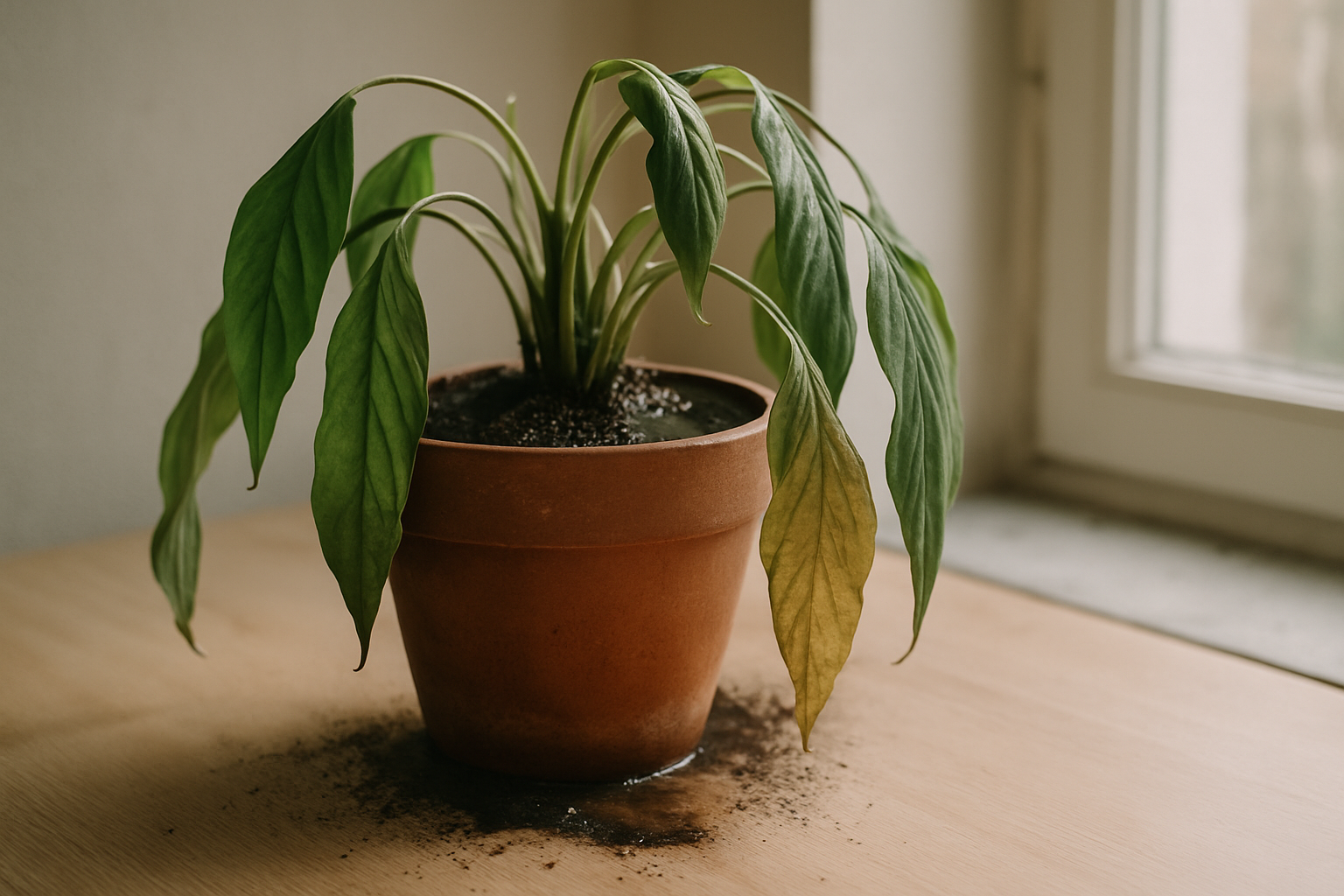
When your plant suddenly looks limp or its leaves are hanging, it’s natural to worry. Drooping is a common symptom, but the underlying cause can vary. Here’s how to recognise the most likely reasons for drooping in both indoor and outdoor plants.
Too Wet or Root Rot
If the soil feels soggy and stays wet for days, your plant may be suffering from overwatering. Roots need air as well as water; if they sit in waterlogged soil, they can start to rot. Signs include yellowing lower leaves, a musty smell, and leaves that feel soft or mushy. This is especially common in houseplants like Monstera or Ficus, and in outdoor pots without drainage.
Too Dry
On the other hand, if the soil is bone dry and pulls away from the edge of the pot, your plant may be thirsty. Leaves may curl, feel crispy at the edges, or droop sharply. This can happen quickly in warm rooms or during hot, windy weather outside. Plants like Strelitzia and lavender are especially sensitive to drying out.
Repotting or Root Damage
After repotting or moving a plant, roots can be disturbed or damaged. This can temporarily reduce their ability to take up water, causing leaves to droop. Most plants recover with time, but avoid extra watering unless the soil is dry.
Change of Location (Light, Drafts, Radiator, Direct Sun)
Moving a plant to a new spot—especially near a radiator, in direct sun, or in a draft—can cause stress. Sudden changes in light or temperature may lead to limp leaves. Ficus and citrus are particularly sensitive to being moved.
Cold or Frost Damage
Exposure to cold drafts, sudden temperature drops, or frost can make leaves droop or collapse. This is a risk for both indoor plants near open windows and outdoor plants in early spring or late autumn. Olive trees and laurel are examples of outdoor plants that react quickly to cold.
Heat or Drying Out
High temperatures and low humidity can cause rapid water loss through the leaves, leading to drooping. This is common during heatwaves or if a plant is placed too close to a heater. Watch for wilting during midday sun, especially in potted plants outdoors.
Stress in New Plants
Newly purchased or recently moved plants often need time to adjust. Temporary drooping is common as they adapt to new light, humidity, and watering routines. Most recover within a week or two if basic care is right.
Related advice
Frequently Asked Questions
- How can I recognise root rot in a drooping plant?
- Root rot often shows as yellowing lower leaves, a musty or sour smell from the soil, and roots that look brown or mushy instead of white and firm. If you suspect root rot, gently remove the plant from its pot to check the roots.
- Can drafts or cold make a plant droop?
- Yes, sudden exposure to cold air or drafts can cause leaves to droop, especially in sensitive plants. Try to keep plants away from open windows, doors, or air conditioning vents.
- What happens if I’ve just moved my plant?
- Plants often react to a new location with temporary drooping as they adjust to different light, temperature, or humidity. Give your plant a week or two to recover, and avoid making further changes unless necessary.
- How quickly do you see the effects of too much or too little water?
- Some plants show signs within hours (like wilting from dryness), while others may take days to react to overwatering. Always check the soil before watering again.
Introgreen Plantcoach
Plant advice and finder
Get help with plant care, plant problems and pests, or find suitable plants from the Introgreen assortment.