
First Aid for Plant Pests
Noticed something unusual on your plant—like tiny bugs, webbing, or sticky leaves? Don’t panic. Many pest problems can be managed with calm, practical steps. Here’s how to give your plant the best chance at recovery, whether it’s a houseplant or something growing outdoors.
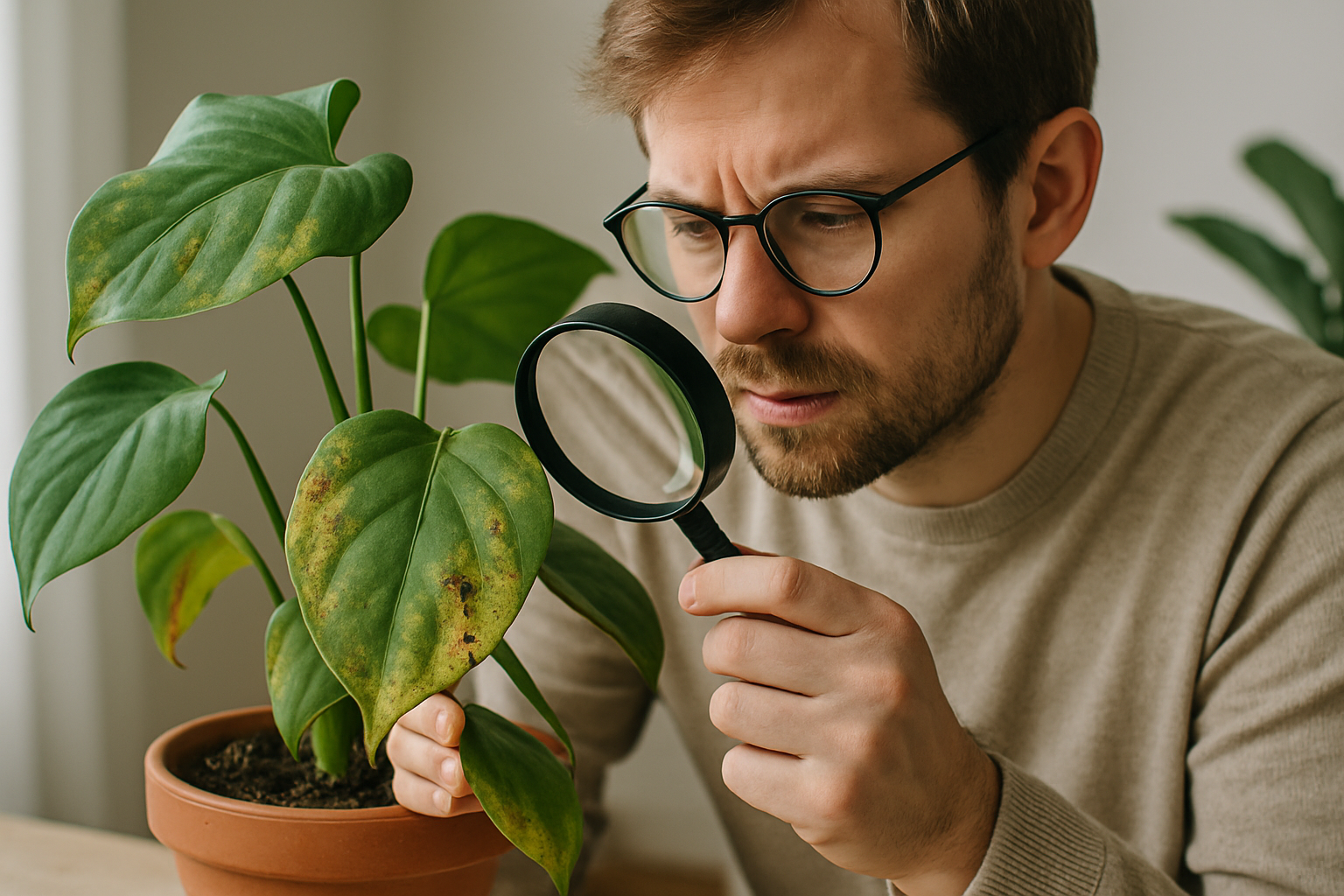
Step 1: Inspect the Plant Thoroughly
- Look closely at both sides of the leaves, stems, and where leaves meet the stem. Use a magnifying glass if you have one.
- Check for visible insects (like aphids, spider mites, or mealybugs), webbing, sticky residue, or unusual spots.
- Don’t forget to inspect the soil surface and the pot rim for signs of movement or eggs.
Step 2: Isolate Houseplants
- If you suspect pests on a houseplant, move it away from other plants to prevent spreading.
- Isolation is less practical outdoors, but you can avoid brushing against affected plants and spreading pests by hand or tools.
Step 3: Check Leaves and Stems
- Gently wipe leaves with a damp paper towel to see if pests or residue come off.
- Look for new damage over the next few days—such as more spots, holes, or curling leaves.
- Remove heavily infested or dead leaves with clean scissors to reduce pest numbers.
Step 4: Check the Soil and Drainage
- Excess moisture can attract fungus gnats and other soil pests. Make sure the pot drains well and the soil isn’t soggy.
- If you see tiny flies when you water, let the top few centimeters of soil dry out before watering again.
Step 5: Don’t Rush – Recovery Takes Time
- After removing pests and damaged parts, give your plant time to recover. New healthy growth is a good sign.
- Continue to monitor for pests every few days. Some infestations may need repeated checks.
- Be patient—plants often need several weeks to bounce back after a pest problem.
When to Seek Professional Help?
- If the infestation keeps returning or spreads to many plants, consider asking a local plant expert or nursery for advice.
- Some pests can be persistent, especially in warm, dry indoor environments or greenhouses.
Frequently Asked Questions
- Should I treat my plant immediately if I see pests?
- It’s best to act as soon as you notice pests. Early intervention—such as isolating the plant and removing visible insects—can prevent the problem from spreading or getting worse.
- How long does it take for a plant to recover after a pest infestation?
- Recovery time varies. Many plants show new healthy growth within a few weeks, but some may take longer, especially if a lot of leaves were damaged or removed.
- Can my plant fully recover from a pest problem?
- Many plants can recover well if the pests are removed and the plant is otherwise healthy. However, severe infestations or repeated problems can weaken a plant. Monitor for new growth and continue care as usual.
- What if the pests keep coming back?
- If pests return repeatedly, double-check for hidden eggs or larvae, and review your plant’s environment for stress factors. Persistent problems may require expert advice or a closer look at your care routine.
Introgreen Plantcoach
Plant advice and finder
Get help with plant care, plant problems and pests, or find suitable plants from the Introgreen assortment.
Start with a plant question
Choose a route or ask your own question below.