
Recognising Pests on Plants: Symptoms and First Aid
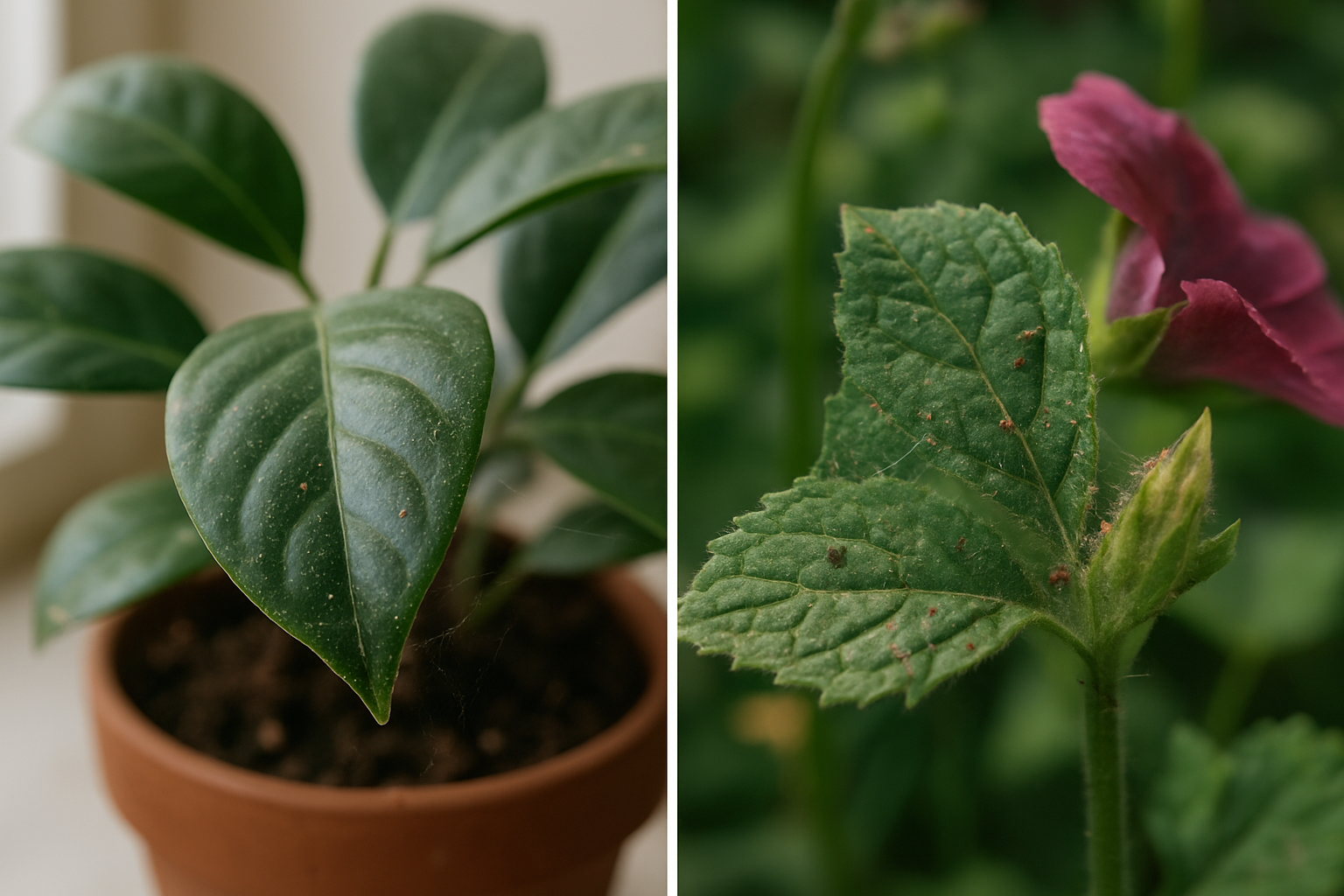
Noticing something odd on your plant? Whether you care for houseplants or garden favourites, pests can show up unexpectedly. Recognising the early signs helps you act calmly and effectively. Here’s how to spot pest problems, tell them apart from other issues, and what to do first.
Common Symptoms of Pests
- Sticky leaves: A sign of sap-sucking insects like aphids or scale insects.
- Fine webs: Often caused by spider mites, especially on the undersides of leaves.
- Tiny moving insects: Look for aphids, mealybugs, or thrips on stems and leaf joints.
- Yellow spots or stippling: Can indicate feeding damage from mites or thrips.
- Deformed or curled leaves: Sometimes caused by pest feeding, but also by environmental stress.
- Black sooty mould: Grows on the sticky residue left by some pests.
First Inspection: What to Do If You Suspect Pests
- Look closely at both sides of the leaves, stems, and soil surface.
- Check for movement—use a magnifying glass if needed.
- Note any sticky, webby, or powdery residues.
- If you find insects or clear signs of pests, move the plant away from others if indoors.
- Take a clear photo if you’re unsure and compare with examples or ask for help.
Distinguishing Pest Damage from Other Problems
- Pest damage often comes with visible insects, webs, or sticky residue.
- Water or light issues usually cause even yellowing, dry edges, or limp leaves without insects or residue.
- If you see both symptoms and insects, pests are likely involved.
When to Isolate Houseplants
If you spot pests or suspect an infestation on a houseplant, it’s safest to move it away from other plants. This helps prevent the problem from spreading. For garden plants, isolation is rarely practical, but you can monitor nearby plants closely.
Examples: Pests on Indoor and Outdoor Plants
FAQ: Recognising Pests on Plants
- How do I recognise a pest problem on my plant?
- Look for sticky leaves, fine webs, tiny insects, or unusual spots. Check both sides of the leaves and the stems. If you see movement or residue, pests are likely present.
- What should I do if I see bugs or webs?
- Inspect the plant thoroughly and, if indoors, move it away from other plants. Take a photo for identification and monitor the plant daily for changes.
- Is damage always caused by pests?
- No, similar symptoms can result from watering issues, low humidity, or too much sunlight. If you don’t see insects or residue, consider environmental causes.
- Should I isolate my houseplant if I find pests?
- Yes, isolation helps prevent pests from spreading to other plants. Place the affected plant in a separate room if possible.
- How quickly should I act if I suspect a pest?
- It’s best to act promptly. Early intervention can limit damage and make control easier. Begin by inspecting, isolating, and monitoring the plant.
- Is plagen-herkennen toxic to dogs and cats?
- plagen-herkennen is generally considered toxic to dogs and cats. Its sap can irritate the mouth, skin or stomach if leaves are chewed or swallowed. Keep the plant out of reach of pets and contact a veterinarian if symptoms occur or if you are unsure.
Introgreen Plantcoach
Plant advice and finder
Get help with plant care, plant problems and pests, or find suitable plants from the Introgreen assortment.
Start with a plant question
Choose a route or ask your own question below.