
Popular Peacock plant Types for Indoors

Introduction to Calathea Types
The peacock plant, or Calathea, is known for its striking foliage and variety of leaf patterns. Several species and cultivars are popular as indoor plants, each with its own appearance and care needs. Below you will find an overview of the most common types and their distinguishing features.
Calathea orbifolia
Calathea orbifolia is recognized by its large, round leaves with broad, silvery stripes. The leaves can reach up to 30 cm in diameter. This species prefers high humidity and indirect light. Leaf edges may brown if the air is too dry or if watering is inconsistent.
Calathea makoyana
Also called the 'peacock plant', Calathea makoyana features oval leaves with dark green feather-like patterns and a reddish underside. The leaves are thinner and more delicate than those of orbifolia. This type is sensitive to cold drafts and prefers stable, warm conditions.
Calathea lancifolia
Known as the 'rattlesnake plant', Calathea lancifolia has long, narrow leaves with wavy edges and dark green spots. The underside is purple. This species tolerates slightly lower humidity than some other Calatheas but still benefits from regular misting.
Other Popular Types
- Calathea roseopicta: Round leaves with pink or white markings.
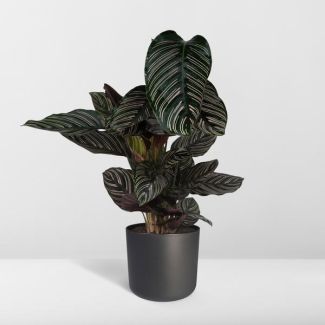
- Calathea ornata: Dark green leaves with thin pink stripes.
- Calathea zebrina: Velvet-like leaves with light and dark green stripes.
Each type has its own visual appeal and may require slight adjustments in care, especially regarding humidity and light.
Differences in Care
While all Calathea species prefer indirect light and moist, well-draining soil, some types are more sensitive to dry air or temperature changes. Always check the specific needs of your chosen variety. Most Calatheas are considered non-toxic to cats and dogs, but if you have concerns, consult a veterinarian for your specific plant species.
Frequently Asked Questions about Peacock plant Types
- Which peacock plant types are suitable for indoors?
- Most Calathea species, including orbifolia, makoyana, lancifolia, roseopicta, ornata and zebrina, are well-suited for indoor environments. They thrive in indirect light and moderate to high humidity.
- What are the differences between Calathea orbifolia and makoyana?
- Calathea orbifolia has large, round leaves with silver stripes, while makoyana features oval leaves with feathered patterns and a reddish underside. Orbifolia tends to need more humidity and is more sensitive to dry air.
- What should I consider when choosing a peacock plant type?
- Consider the available light, humidity in your home, and the size of the plant. Some types require higher humidity or more space. Always check the specific care needs of the variety you select.
Introgreen Plantcoach