
Humidity for Houseplants
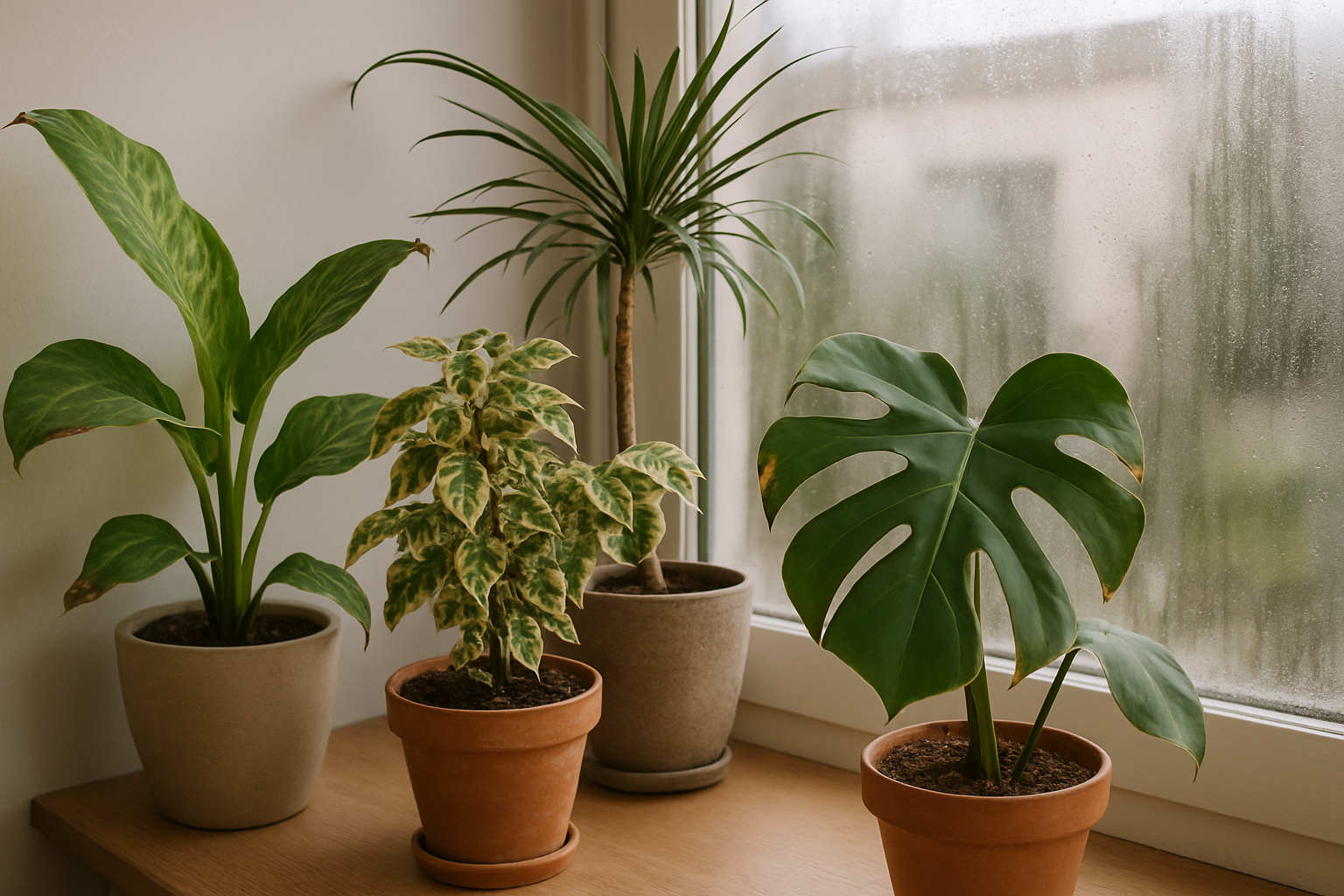
Why is humidity important?
Most houseplants come from tropical or subtropical regions, where the air is naturally more humid than in most homes. Central heating and air conditioning can make indoor air quite dry, especially in winter. Low humidity can stress plants, leading to brown leaf tips, curling, or slow growth. Keeping humidity at a comfortable level helps your plants stay healthy and look their best.
Signs of air that's too dry
- Brown or crispy leaf edges, especially on thin-leaved plants
- Leaves that curl or feel papery
- Slower growth or buds that dry up before opening
- Increased leaf drop, especially in winter
If you notice these symptoms, dry air may be part of the problem. Check for other causes too, such as watering or light issues.
How can you measure humidity?
Humidity is measured as a percentage. Most houseplants do best at 40–60% relative humidity. You can use a simple digital hygrometer to check the air in your room. If you don't have one, signs like condensation on windows or static electricity can hint at higher or lower humidity, but these are less precise.
Tips for a better indoor climate
- Group plants together: they create a small, more humid microclimate.
- Keep plants away from direct heat sources like radiators or heating vents.
- Ventilate regularly, but avoid cold drafts.
- In winter, placing plants in kitchens or bathrooms (if there's enough light) can help, as these rooms are often more humid.
- Misting can temporarily raise humidity, but it's not a long-term solution for all plants.
Frequently Asked Questions
- Which houseplants are sensitive to dry air?
- Plants with thin or delicate leaves, such as ferns, Calathea, and Maranta, are often more sensitive to low humidity. Succulents and cacti, on the other hand, usually tolerate dry air well. If you're unsure, check the care instructions for your specific plant.
- How do I recognize damage from dry air?
- Look for brown, crispy edges on leaves, curling or drooping leaves, and buds that dry out before opening. These symptoms can also have other causes, so check watering and light as well.
- Should I mist my plants?
- Misting can give a short-term boost in humidity, especially for plants that enjoy it, like ferns. However, it doesn't change the overall room humidity for long. Some plants, such as those with hairy or velvety leaves, may not benefit from misting and could develop spots. Always check what's best for your plant type.
- Is kamerplanten-algemeen toxic to dogs and cats?
- kamerplanten-algemeen is generally considered toxic to dogs and cats. Its sap can irritate the mouth, skin or stomach if leaves are chewed or swallowed. Keep the plant out of reach of pets and contact a veterinarian if symptoms occur or if you are unsure.
Introgreen Plantcoach
Plant advice and finder
Get help with plant care, plant problems and pests, or find suitable plants from the Introgreen assortment.