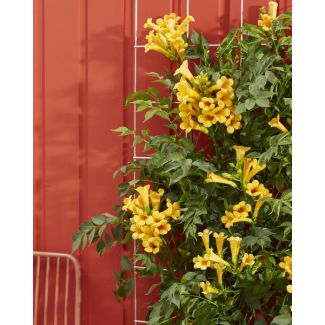
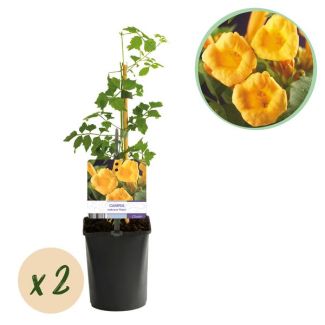
The Mandevilla Sundaville Early Scarlet In Tower is a fantastic climbing plant with large trumpet-shaped flowers.
This plant blooms non-stop all summer long, making it a popular plant species.
The outdated name Dipladenia is still often used, but you will also see Sundaville or mandevilla on the label at the garden center. This is all the same plant.
There are about 200 species and quite a few cultivars for the garden.
A number of characteristics and care tips for the Mandevilla are:
Flowers: Mandevilla produces large, trumpet-shaped flowers. The color of the flowers is beautiful Red.
The flowers are often brightly colored and have a striking appearance, making them a focal point
in any garden or on any terrace.
Blooming period: The Mandevilla blooms from mid-spring until the first frost period in the fall.
Leaves: The leaves of Mandevilla are usually glossy green and can have an oval or lance-shaped form.
The leaves are attractive and provide a lush background for the colorful flowers.
Climbing plant: Mandevilla is a climbing plant that clings to structures using tendrils.
It can reach a considerable height and is often used to cover fences, trellises, arches, and other supporting structures.
Light: Mandevilla thrives best in full sun to partial shade.
Make sure the plant receives at least 4 to 6 hours of direct sunlight per day for good growth and blooming.
Soil: Ensure well-draining, fertile soil that does not stay too wet.
Mandevilla prefers moist but well-draining soils with a neutral to slightly acidic pH.
Water: Preferably water at the base of the plant to prevent the leaves from getting wet,
which can promote fungal diseases.
Fertilization: Regularly provide the Mandevilla with a balanced fertilizer during the growing season to stimulate growth and blooming.
Hardiness: Mandevilla is not naturally hardy and does not tolerate frost well. In colder climates, Mandevilla
should be considered an annual plant, meaning it does not survive at temperatures