Rubus occidentalis 'Black Jewel', better known as The Black Raspberry, is a fruitful shrub known for its delicious fruits. These fruits are not only tasty but also rich in antioxidants, making them a healthy addition to any diet.
The plant itself is attractive and functional, ideal for any edible garden.
Description: The black raspberry has dark purple to black berries that grow on shrubs with thorny stems. The berries are covered with a waxy layer, giving them a shiny appearance.
Taste: The berries have a sweet and slightly tart flavor, similar to raspberries. They are perfect for eating fresh, but you can also use them in jams, pies, smoothies, and other dishes.
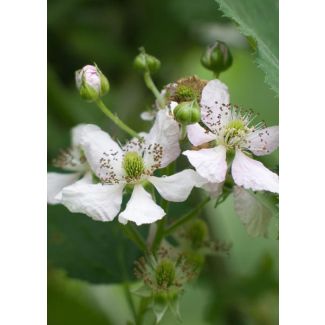
Flowers: Small, white flowers that bloom in the spring
Fruits: Dark purple to nearly black berries that ripen in the summer
Location: The black raspberry thrives best in a sunny spot. The more sun, the richer the harvest. They can also tolerate partial shade, but this may reduce fruit production.
Water: Water the plant regularly, especially during dry periods and the growing season. The soil should remain moist but not soggy. Good drainage is important to prevent root rot.
Soil: Use well-draining, fertile soil. The plant is fairly tolerant of different soil types, but a slightly acidic to neutral soil is ideal.
Fertilization: Fertilize in early spring with a balanced, organic fertilizer to stimulate growth and fruit production. Repeat if necessary in the summer.
Pruning: Prune the black raspberry in late winter or early spring to remove dead or damaged branches. After harvesting, the canes that bore fruit can be cut back to the ground, as the plant produces fruit on two-year-old wood.
Winter Care: The black raspberry is fairly hardy, but a thick layer of mulch can help protect the roots from extreme cold.
Toxicity:
Rubus occidentalis 'Black Jewel' is non-toxic and safe for humans and pets. The fruits are edible and healthy, rich in vitamins and antioxidants.