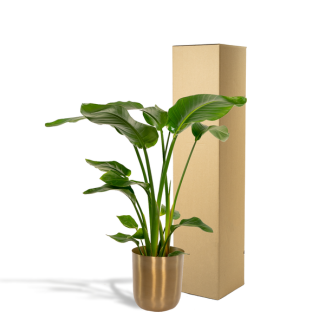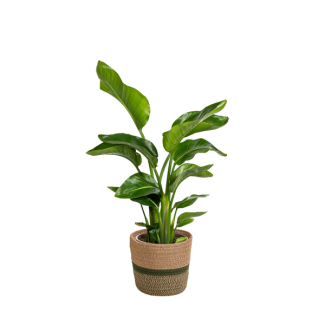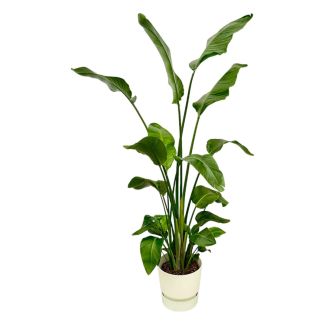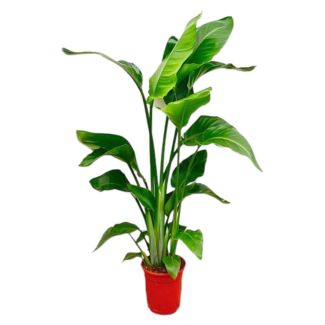
Strelitzia care: light, water & maintenance

Placement & Light Requirements
Strelitzia prefers a bright spot indoors with plenty of indirect sunlight. Direct morning or late afternoon sun is tolerated, but avoid harsh midday rays to prevent leaf scorch. A location near an east or west-facing window is ideal. If the plant receives too little light, growth will slow and leaves may droop.
Watering & Humidity
Water your Strelitzia when the top 3–5 cm of soil feels dry to the touch. In spring and summer, this may mean watering once a week; in autumn and winter, reduce frequency as growth slows. Always empty excess water from the saucer to prevent root rot. Strelitzia appreciates moderate humidity but usually adapts to typical indoor air. Misting is optional—if you do, use room-temperature water and avoid soaking the leaves.
Soil & Feeding
Use a well-draining, peat-free potting mix suitable for houseplants. Ensure the pot has drainage holes. During the growing season (March–September), feed with a balanced liquid fertilizer at half strength every 4–6 weeks. Do not fertilize in winter.
Pruning & Removing Damaged Leaves
Remove yellow or brown leaves by cutting them off at the base with clean scissors. Minor browning at the leaf edges is common and can be trimmed carefully. Pruning is not required for shape, but removing damaged foliage helps keep the plant tidy and healthy.
Repotting: When and How
Repot your Strelitzia every 2–3 years or when roots grow out of the drainage holes. The best time is in spring. Choose a pot 2–4 cm wider than the current one. Gently loosen the root ball and refresh the soil. Water lightly after repotting and keep the plant out of direct sun for a few days.
Common Care Mistakes
- Overwatering: Always check soil dryness before watering.
- Too little light: Leads to slow growth and weak stems.
- Using pots without drainage: Increases risk of root rot.
- Neglecting to remove dead leaves: Can attract pests.
FAQ: Is Strelitzia toxic to dogs and cats?
Strelitzia species are considered mildly toxic if ingested by pets. Symptoms may include drooling, vomiting, or mild digestive upset. If you suspect your pet has eaten part of the plant, contact your veterinarian for advice. Place Strelitzia out of reach of curious animals.
Frequently Asked Questions
- How much water does a Strelitzia need?
- Water when the top 3–5 cm of soil is dry. In active growth, this is usually once a week. Reduce watering in winter.
- Should I mist my Strelitzia?
- Misting is optional. Strelitzia tolerates normal indoor humidity, but occasional misting can help in very dry air. Avoid wetting the leaves excessively.
- What soil is best for Strelitzia?
- Use a well-draining, peat-free potting mix for houseplants. Ensure the pot has drainage holes to prevent waterlogging.
- Is Strelitzia toxic to pets?
- Strelitzia is considered mildly toxic to cats and dogs if ingested. Keep the plant out of reach and consult a vet if your pet eats any part of it.
- When should I repot my Strelitzia?
- Repot every 2–3 years, ideally in spring, or when roots are visible at the bottom of the pot.