
Kentia palm types: which should you choose?

Introduction to Kentia palm types
The Kentia palm (Howea forsteriana) is a popular indoor palm known for its elegant, arching fronds and tolerance of typical home conditions. While most Kentia palms available for indoor use are of the species Howea forsteriana, there are differences in size, growth habit and appearance depending on age, cultivation method and selection. True botanical varieties are limited, but nurseries may offer different forms based on plant maturity and leaf structure.
Growth forms and leaf shapes
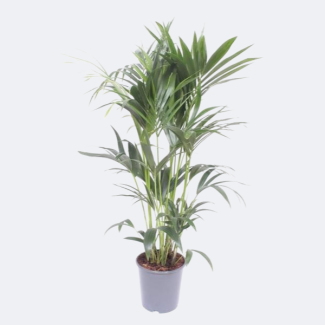
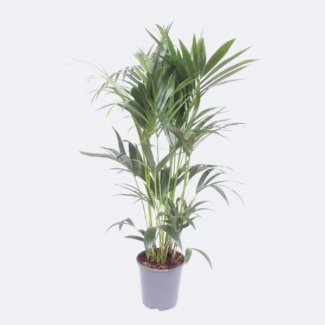
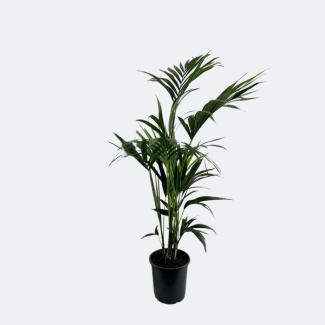
Kentia palms are typically sold as single-stemmed or multi-stemmed specimens. Single-stemmed plants have one main trunk and develop a classic palm silhouette over time. Multi-stemmed Kentia palms are clusters of several young plants in one pot, creating a fuller appearance. Leaf shape can vary slightly: younger plants have narrower, more upright fronds, while mature specimens develop broader, arching leaves. Leaf color ranges from medium to dark green, sometimes with subtle differences depending on growing conditions.
Size and growth habit
Indoor Kentia palms are available in a range of sizes, from compact table-top plants (around 40-60 cm tall) to large floor specimens over 2 meters. Growth is generally slow, with mature plants reaching their full height over many years. When choosing a Kentia palm, consider the available space and ceiling height. Larger plants make a statement but require more room for their arching fronds. Smaller, younger palms are easier to place and adapt well to most indoor environments.
What to consider when choosing a Kentia palm
- Available space: Measure the intended spot, including ceiling height and width for the fronds.
- Light levels: Kentia palms tolerate lower light, but growth is best with bright, indirect light.
- Plant maturity: Younger plants are more affordable and adapt well, while mature specimens offer instant impact but are heavier and more costly.
- Pot size and stability: Larger palms need sturdy pots to prevent tipping.
- Leaf condition: Check for healthy, green leaves with minimal browning or yellowing.
For current options, see the Kentia palm category for available sizes and forms.
Related advice

Frequently asked questions about Kentia palm types
- What types of Kentia palm are available?
- Most Kentia palms sold for indoor use are Howea forsteriana. Differences are mainly in plant size, number of stems (single or multi-stemmed), and maturity. True botanical varieties are rare in cultivation.
- Which Kentia palm suits my interior?
- Choose a size that fits your space. Large, mature Kentia palms are suitable for spacious rooms, while smaller or multi-stemmed plants work well in compact areas. Consider light levels and available floor space for the fronds.
- What should I look for when selecting a Kentia palm?
- Check for healthy, green leaves, a stable root system, and minimal signs of stress such as browning tips or yellowing. Ensure the plant is well-potted and appropriate for your available space and light conditions.