
Recognising and Managing Drought Stress in Plants
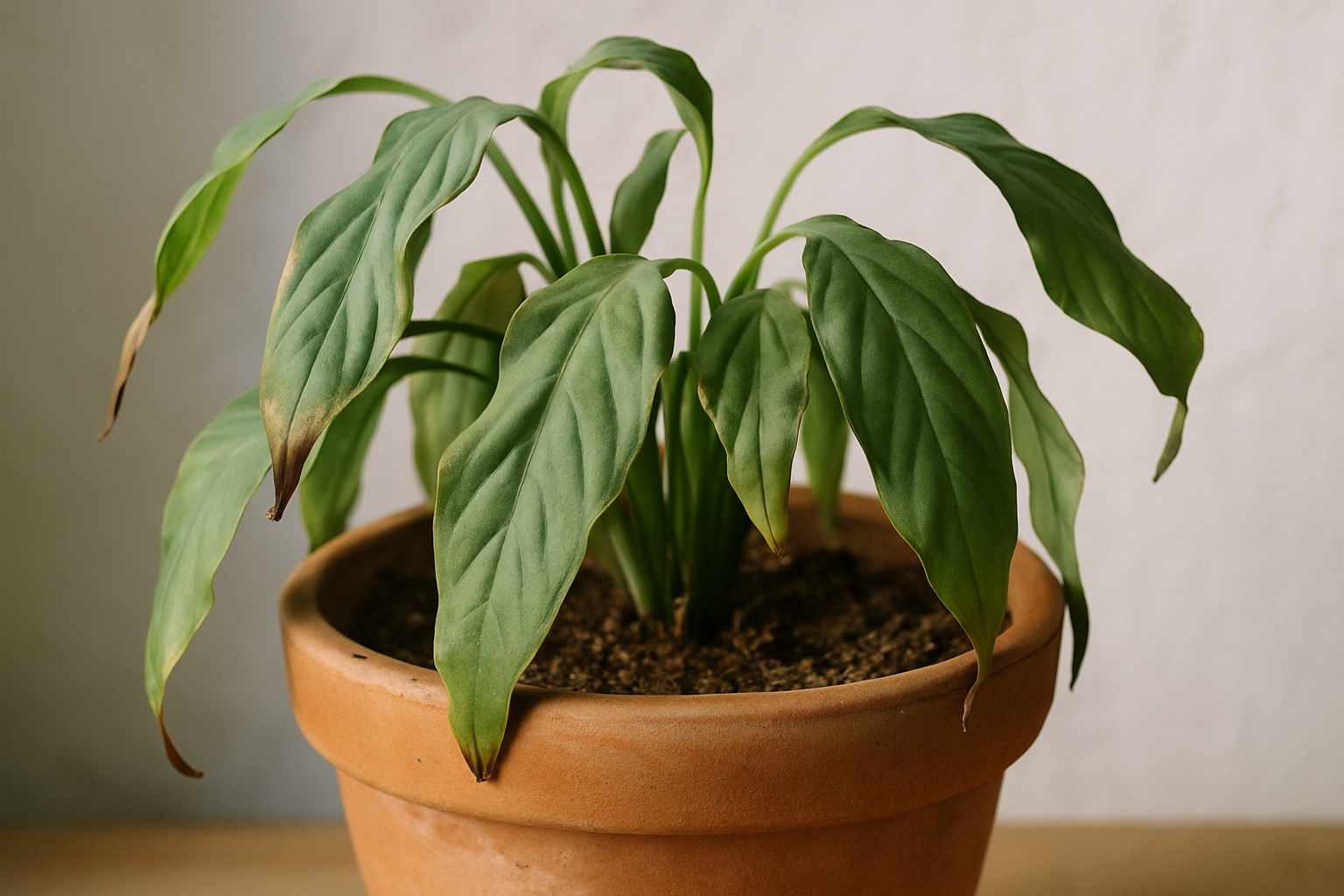
What is drought stress?
Drought stress occurs when a plant receives less water than it needs for a period of time. This can happen indoors or outdoors, and affects both potted and garden plants. The plant's roots and leaves show clear signs when water is lacking, but the symptoms can vary depending on the plant type and environment.
Symptoms in different plant types
- Houseplants: Limp or drooping leaves, dry or hard potting soil, brown or crispy leaf edges, and sometimes leaf drop. Common in species like Monstera, Ficus, and Strelitzia.
- Balcony and garden plants: Wilting stems, brown or curled leaf tips, dry soil that pulls away from the pot edge, and in severe cases, leaf loss. Olives, lavender, citrus and laurel are often affected.
- General: The plant may look dull, leaves may feel thin or papery, and growth can slow down.
Quick checklist: what to do now?
- Check the soil: Is it dry several centimetres deep? If so, your plant likely needs water.
- Water gently: Add water slowly until the soil is evenly moist, but avoid soaking the plant all at once.
- Move if needed: If the plant is in direct sun or near a heat source, move it to a cooler, shaded spot temporarily.
- Wait and observe: Give the plant time to recover. Some leaves may not bounce back, but new growth can appear in the following weeks.
- Review care routine: Consider if your watering schedule or plant location needs adjustment to prevent future stress.
Explore more about drought stress
- Causes of drought stress
- First aid for drought stress
- Examples: Houseplants & drought stress
- Examples: Outdoor plants & drought stress
- When to worry about drought stress?
Frequently Asked Questions about Drought Stress
- How do I recognise drought stress in my plant?
- Look for limp or drooping leaves, dry soil (especially if it pulls away from the pot), brown or crispy leaf edges, and sometimes leaf drop. These signs are common in both indoor and outdoor plants.
- Can my plant recover from drought stress?
- Many plants can recover if the roots are still healthy. After gentle watering and a stable environment, new growth may appear. Severely damaged leaves may not recover, but do not remove them until they are fully dry or dead.
- What is the difference between too dry and too wet?
- Too dry: Soil feels hard, light, or pulls away from the pot. Leaves wilt and may become crispy. Too wet: Soil feels soggy, roots may rot, and leaves can turn yellow or mushy. Always check soil moisture before watering.
- Should I give a lot of water immediately after drought?
- No, avoid flooding the plant. Water slowly and allow the soil to absorb moisture gradually. Overwatering after drought can cause root problems.
- Which plants are extra sensitive to drought stress?
- Plants with thin leaves (like ferns), young plants, and those in small pots dry out faster. Mediterranean species like olive and citrus are adapted to some drought but can still suffer in pots.
- Is droogtestress toxic to dogs and cats?
- droogtestress is generally considered toxic to dogs and cats. Its sap can irritate the mouth, skin or stomach if leaves are chewed or swallowed. Keep the plant out of reach of pets and contact a veterinarian if symptoms occur or if you are unsure.
Introgreen Plantcoach
Plant advice and finder
Get help with plant care, plant problems and pests, or find suitable plants from the Introgreen assortment.
Start with a plant question
Choose a route or ask your own question below.