
Popular Types of Banana Plants as Houseplants

Banana plants (Musa spp.) are valued as striking houseplants thanks to their large, decorative leaves and fast growth. Several species and cultivars are suitable for indoor use, each with its own characteristics and care needs. Below you will find an overview of the most common types for indoors, plus practical tips for choosing the right variety.
Introduction to Banana Plant Types
Not all banana plants are equally suitable for indoor conditions. Most indoor banana plants belong to the Musa genus. The main differences between varieties are in size, leaf shape, growth speed and, to a lesser extent, care requirements.
Musa acuminata
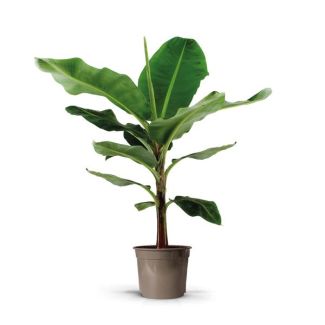
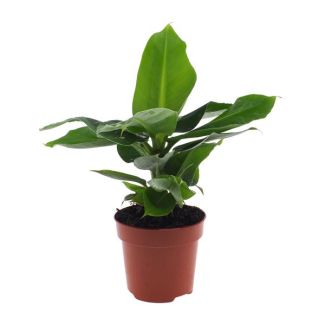
Musa acuminata is one of the most common banana species for indoors. It has long, bright green leaves and can grow quickly in a warm, bright spot. Mature plants can reach up to 2 meters indoors, but size depends on pot and care. Fruiting is rare indoors.
Musa 'Dwarf Cavendish'
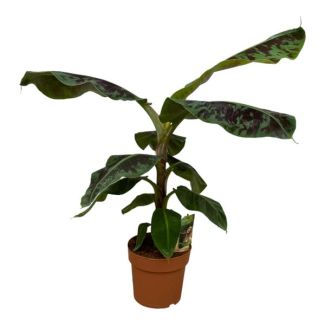
Musa 'Dwarf Cavendish' is a compact cultivar, making it suitable for smaller spaces. The leaves are broad and often have reddish or purple spots when young. This variety typically stays under 1.5 meters indoors. Like other banana plants, it prefers high humidity and regular watering.
Musa basjoo (for indoors)
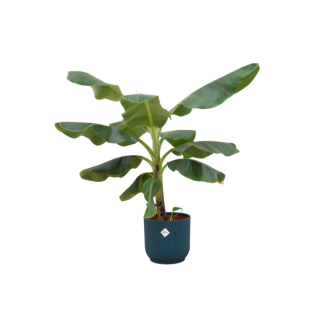
Musa basjoo is known as the hardy banana and is often used outdoors, but young plants can also be kept indoors. It has slightly narrower leaves and a robust growth habit. Indoors, it usually remains smaller than outside and rarely flowers or fruits.
Differences in Care and Growth
- Size: Dwarf Cavendish stays more compact; acuminata and basjoo can become larger.
- Leaf color: Dwarf Cavendish often shows red or purple spots on young leaves.
- Growth speed: All types grow quickly with enough light and water.
- Fruiting: Fruiting is rare indoors due to lack of pollination and space.
Which Type Suits You?
Choose a variety based on available space and your preference for leaf color or size. Dwarf Cavendish is suitable for smaller rooms, while Musa acuminata and basjoo are better for larger, bright spaces. All banana plants need regular watering, high humidity, and as much indirect light as possible.
Frequently Asked Questions about Indoor Banana Plant Types
- Which banana plant types are suitable for indoors?
- Musa acuminata, Musa 'Dwarf Cavendish', and young Musa basjoo are commonly used as houseplants. Dwarf Cavendish is especially suitable for smaller spaces.
- What is the difference between Musa acuminata and Musa 'Dwarf Cavendish'?
- Musa acuminata grows taller and has plain green leaves, while Dwarf Cavendish is more compact and often shows reddish or purple spots on young leaves.
- Will a banana plant actually produce bananas indoors?
- Banana plants rarely produce edible fruit indoors. Flowering and fruiting require ideal conditions, including high light, warmth, and space. Most indoor banana plants are grown for their decorative foliage.