
Using Allium in the Garden: Combinations and Inspiration
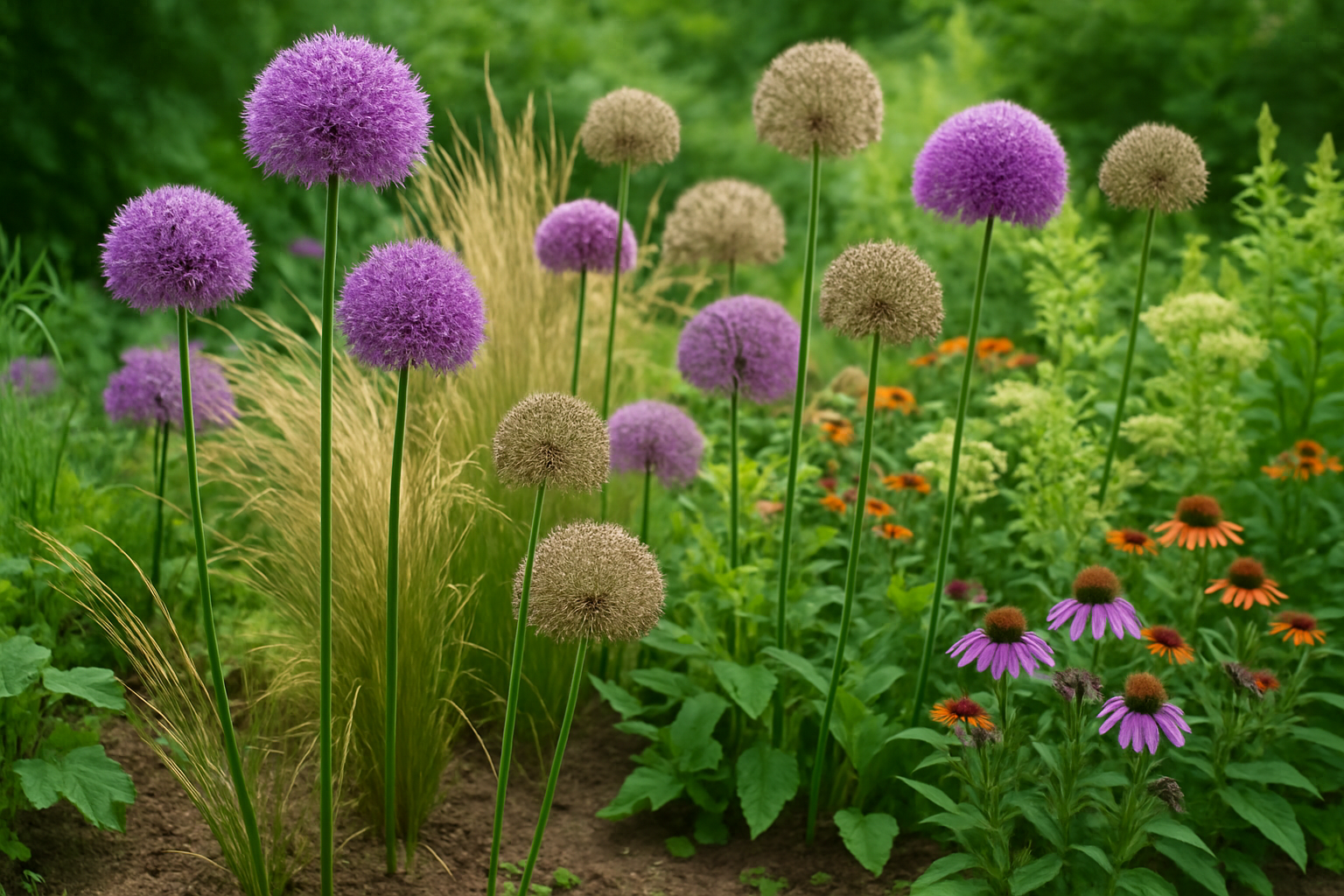
Alliums, or ornamental onions, are a striking addition to any garden. Their globe-shaped flower heads and upright stems bring structure and a playful touch to borders, containers, and naturalistic plantings. Here, you'll find practical ideas for combining alliums with other plants, making the most of their height, and enjoying their decorative value throughout the season.
Allium in Borders: Height and Structure
Alliums are known for their vertical presence. Taller varieties like Allium 'Globemaster' or Allium giganteum can reach up to 120 cm, making them perfect for the middle or back of a border. Smaller types, such as Allium 'Purple Sensation' or Allium sphaerocephalon, work well at the front or in groups among lower-growing plants. Planting alliums in clusters creates a natural look and helps their flower heads stand out.
Combining with Perennials and Ornamental Grasses
Alliums pair beautifully with perennials like Geranium, Salvia, Nepeta (catmint), and Alchemilla mollis (lady's mantle). Their upright stems rise above the foliage, while the surrounding plants help hide allium leaves as they die back after flowering. Ornamental grasses such as Stipa tenuissima or Pennisetum add movement and a soft contrast to the bold allium heads. Try mixing several allium varieties for a layered effect in both height and color.
Allium as a Pollinator Plant
Allium flowers are rich in nectar and attract bees, butterflies, and other pollinators. Planting them among other insect-friendly perennials extends the feeding season for garden wildlife. Leave some flower heads standing after bloom to provide additional habitat and visual interest.
Decorative Value of Spent Flower Heads
Even after flowering, allium heads remain decorative. Their dried seed heads add structure and a sculptural touch to borders well into late summer and autumn. You can leave them standing for a natural look or cut them for dried flower arrangements indoors.
Allium in Pots or Open Ground
Alliums can be grown in large pots as well as in open ground. Choose compact varieties for containers and ensure good drainage. In borders, plant bulbs in groups for a more natural effect. Both options allow you to enjoy allium's unique character even in smaller spaces.
More about Allium
Frequently Asked Questions about Allium Combinations
- Which plants combine well with Allium?
- Alliums pair well with perennials such as catmint (Nepeta), geraniums, lady's mantle (Alchemilla mollis), and ornamental grasses. These companions help cover fading allium leaves and create a layered, natural look.
- How do you use height differences with Allium?
- Mixing tall and short allium varieties creates depth and interest in borders. Place taller types towards the back or middle, and shorter ones at the front or in groups. Combining different heights gives a dynamic, naturalistic effect.
- Do spent Allium flower heads remain decorative?
- Yes, dried allium heads add structure and visual interest to the garden long after flowering. You can leave them standing in the border or cut them for use in dried arrangements indoors.
- Is Allium suitable for pots?
- Compact allium varieties can be grown in large pots with good drainage. Group several bulbs together for the best effect. Water regularly during growth, but avoid waterlogged soil.
Introgreen Plantcoach