
Allium: Common Problems and Solutions
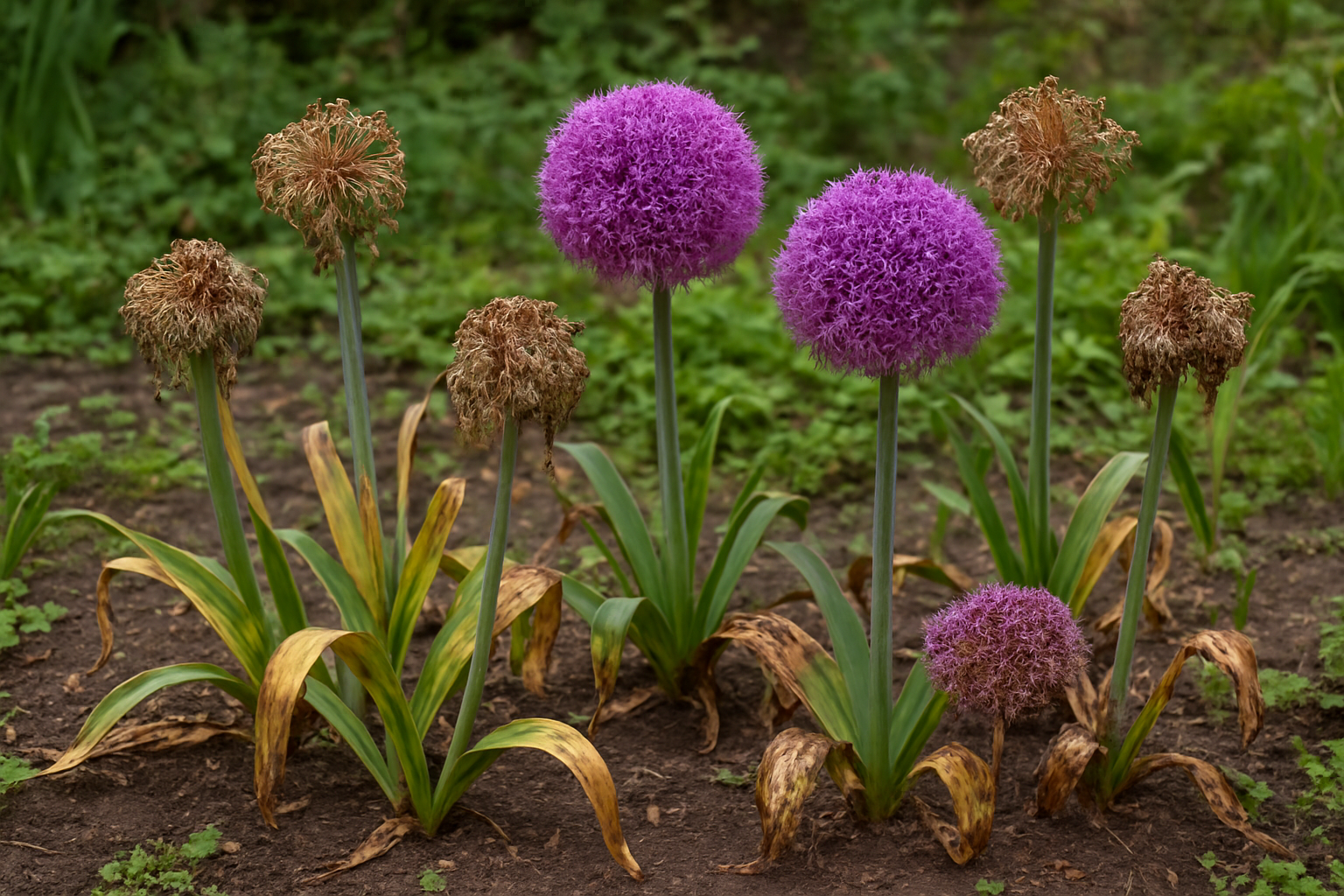
Poor Flowering: Causes and Tips
It can be disappointing when Alliums fail to bloom as expected. Common reasons include:
- Bulbs planted too shallow or too deep: Allium bulbs generally need to be planted at a depth of about two to three times their own height.
- Soil too wet or poorly drained: Excess moisture can cause bulbs to rot or fail to develop properly.
- Bulbs too young or too small: Some Allium varieties need a year or more to establish before flowering well.
- Overcrowding: Bulbs planted too close together may compete for nutrients and space, reducing blooms.
- Foliage removed too early: Allow leaves to die back naturally after flowering so the bulb can store energy for next year.
If your Alliums are not flowering, check planting depth, soil drainage, and bulb quality. Sometimes, patience is needed—some bulbs improve after their first year.
Bulb Rot and Poor Growth
Bulb rot is often caused by excess moisture or heavy, poorly draining soil. Signs include soft, mushy bulbs and stunted or yellowing growth. To help prevent rot:
- Plant Allium bulbs in well-drained soil, preferably in a raised bed or sandy area if your garden is heavy clay.
- Avoid watering bulbs after planting in autumn; natural rainfall is usually sufficient.
- Remove and discard any bulbs that show signs of rot to prevent spread.
Animal Damage
Allium bulbs are less attractive to many garden pests due to their onion-like scent, but some animals may still dig them up, especially when freshly planted. Rodents and birds are the most common culprits. To reduce damage:
- Cover newly planted areas with a layer of twigs or garden netting until shoots appear.
- Plant bulbs a little deeper if you have persistent problems with digging animals.
Most pets, such as dogs and cats, tend to avoid Allium bulbs, but ingestion can be harmful. If you suspect your pet has eaten any part of an Allium, consult your veterinarian for advice.
Diseases and Pests Affecting Allium
Alliums are generally robust, but can occasionally suffer from:
- Onion fly larvae: These may damage bulbs, causing weak growth. Remove affected plants and avoid replanting Alliums in the same spot for a few years.
- Fungal diseases: Yellowing or spotted leaves may indicate fungal issues, often linked to wet conditions. Improve drainage and remove affected foliage.
What to Do with Spent Allium Flower Heads?
After flowering, Allium heads can be left standing for decorative effect and to provide structure in the border. If you prefer a tidier look, cut them back once they have faded. Always allow the foliage to die back naturally before removing it, as this helps the bulb store energy for the next season.
Frequently Asked Questions about Allium Problems
- Why isn't my Allium flowering?
- Common causes include bulbs planted at the wrong depth, poor soil drainage, bulbs that are too young or small, or foliage removed too early. Check these factors and allow time for bulbs to establish.
- How can I prevent bulb rot in Allium?
- Plant bulbs in well-drained soil and avoid overwatering, especially after planting. Remove any bulbs that show signs of rot to prevent it from spreading.
- Which animals eat Allium bulbs?
- Rodents and birds may dig up bulbs, especially when freshly planted. Most pets avoid Allium, but ingestion can be harmful. If in doubt, consult your veterinarian.
- What should I do with spent Allium flower heads?
- You can leave them for decorative effect or cut them back once faded. Always let the foliage die back naturally before removing it.
Introgreen Plantcoach