


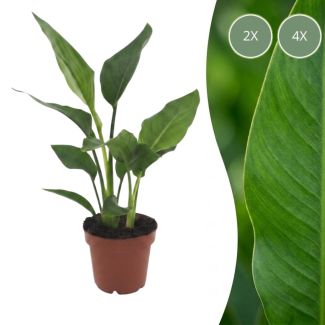
paradise bird flower Tropical Green Plant, Strelitzia Nicolai, Ø21cm - ↕80cm | ↕80 cm | Ø21 cm
paradise bird flower Tropical Green Plant, Strelitzia Nicolai, Ø21cm - ↕80cm
Frequently Asked Questions
What light conditions does the Strelitzia nicolai require?
The Strelitzia nicolai requires bright, indirect light. Avoid direct sunlight on the leaves to prevent burning.
How often should I water my Strelitzia nicolai?
Water the Strelitzia nicolai moderately, allowing the soil to dry out well between waterings. Reduce watering in winter.
Is the Strelitzia nicolai toxic to pets?
Yes, the Strelitzia nicolai is mildly toxic to both humans and pets, potentially causing stomach upset if ingested.
What type of soil is best for Strelitzia nicolai?
Use well-draining, slightly acidic soil, ideally a mix of potting soil with perlite or sand for good drainage.
Can the Strelitzia nicolai flower indoors?
Flowering indoors can be challenging but is possible with sufficient light and warmth in a larger space.
- Buy 2 for €46.45 each and save 7%
- Buy 4 for €44.96 each and save 10%
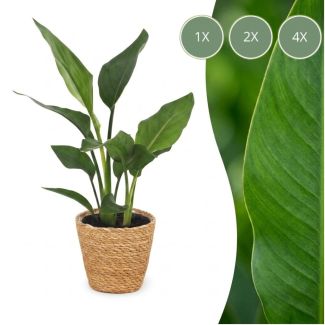
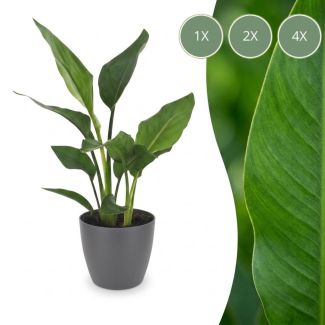
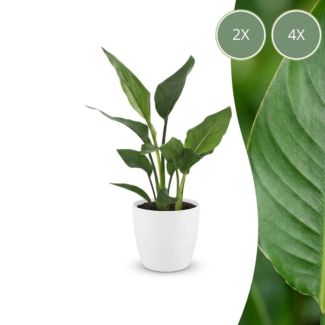
Details
Strelitzia nicolai, also known as the White Bird of Paradise or Giant Bird of Paradise Flower, is an impressive tropical plant native to South Africa. It is the larger variant of the well-known Strelitzia Reginae, and can reach an impressive height of up to 5 meters in the wild under the right conditions. However, indoors, the plant will maintain a much smaller size.
Some characteristics and care tips for the Strelitzia nicolai include:
Leaves: The leaves of the Strelitzia nicolai are large, long, and gray-green in color, and can grow up to 2 meters long in their natural habitat. They have an elegant arching shape and are often likened to a type of tropical banana leaf.
The leaf structure is leathery and firm, contributing to the robust appearance of the plant.
Flowers: Strelitzia nicolai has striking flowers that resemble the well-known bird of paradise (which inspired the name of the plant). The flowers are usually white with a blue and orange hue, but unlike the smaller Strelitzia reginae (the classic "bird of paradise plant"), the flowers appear in the form of a large plume with a blue bract that rises from a green flower bud.
Flowering usually occurs in the summer, but this can be a challenge indoors. Flowering is primarily possible if the plant is in a larger space and receives sufficient light and warmth.
Size: In ideal conditions, the Strelitzia nicolai can grow up to 5 meters tall, although in living rooms, the plant usually does not exceed 2-3 meters.
Stems: The stems are robust and grow upward towards the light, giving the plant a palm-like appearance.
Light: This plant requires a lot of bright, indirect light. The more light you can provide the plant, the better the growth and potential for flowering. Direct sunlight can lead to burned leaves, so avoid direct sunlight on the leaf surface, especially in the summer.
A spot by a south or west-facing window is ideal, but be careful not to place the plant in direct sunlight, as this can damage the leaves.
Temperature: Strelitzia nicolai loves warm conditions. The ideal temperature is between 18°C and 24°C. Temperatures below 10°C can be harmful to the plant, so avoid drafty areas and cold environments.
Watering: The plant needs moderate amounts of water, but make sure the soil dries out well between waterings. Overwatering can lead to root rot. It is essential to use well-draining potting soil.
In winter, you can reduce watering, as the plant enters a dormant period.
Humidity: Strelitzia nicolai enjoys high humidity. In dry environments, you can increase humidity by regularly misting the leaves with water or placing a humidifier near the plant.
Soil: The plant requires well-draining, slightly acidic soil. A mixture of potting soil with some perlite or sand is ideal to ensure good drainage.
Fertilizing: During the growing season (spring and summer), you can fertilize the plant once a month with a liquid fertilizer for houseplants. In autumn and winter, the plant needs less nutrition, so stop fertilizing during this period.
Repotting: The Strelitzia nicolai grows quickly and may outgrow its pot over time. It is a good idea to repot the plant every 2-3 years into a larger pot to support its growth. This is best done in spring, before the new growing season begins.
Pruning: Regularly remove dead or damaged leaves to keep the plant looking neat and to make room for new growth. Never prune too much at once, as the plant needs time to recover from drastic pruning.
Is the Strelitzia nicolai toxic?
Yes, the Strelitzia nicolai is mildly toxic to both humans and pets. The plant contains substances that, when ingested, can lead to stomach upset, nausea, or vomiting. The leaves or other parts of the plant can cause irritation upon contact with the skin, although this is not common. Therefore, it is advisable to keep the plant out of reach of small children and pets.
.
With the right care, the Strelitzia nicolai will grow into a beautiful, tropical plant that makes a statement in your interior!
More Information
| Plant height | 80 |
|---|---|
| Pot size | 21 |
| Toxic | Yes |
| Botanical name | Strelitzia |
| Decorative pot | Without pot |
| Delivery time in days | 1 |
| ean | 8721143622271 |
| Quantity in package | 1 |
| verpakking gewicht | 400 g |
Reviews
Write Your Own Review