
Types of Date Palms as Houseplants
Date palms (Phoenix spp.) are popular indoor palms due to their elegant appearance and adaptability. Several species are available as houseplants, each with distinct characteristics. Below you will find an overview of the most common types, their suitability for indoor use, and practical considerations for choosing the right date palm for your home.
Phoenix roebelenii (Pygmy Date Palm)
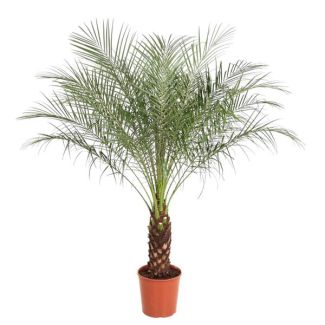
The Phoenix roebelenii is the most popular date palm for indoor use. It is compact, usually reaching 1–2 meters in height indoors, and has fine, arching fronds. This species tolerates lower light better than larger date palms and is less likely to develop sharp spines. It prefers a bright spot out of direct sunlight and moderate watering. Growth is relatively slow, making it suitable for long-term indoor cultivation.
Phoenix canariensis (Canary Island Date Palm)
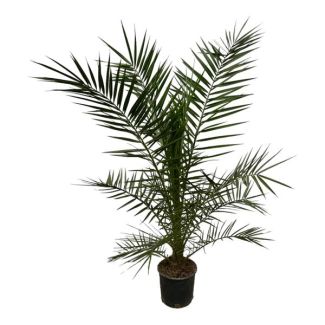
The Phoenix canariensis is larger and more robust, with wide, feather-like leaves and a thicker trunk. Indoors, it can eventually reach 2–3 meters, but growth is slow. This species needs more space and brighter light. The leaf bases and petioles can have sharp spines, so placement away from high-traffic areas is recommended. It is best suited for spacious, well-lit rooms.
Phoenix dactylifera (True Date Palm)
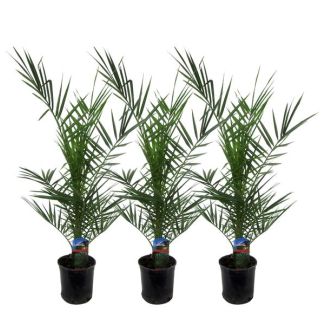
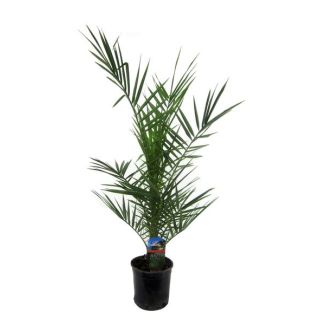
The Phoenix dactylifera is the species grown for edible dates. As a houseplant, it is less common due to its eventual size and need for high light. Young plants can be kept indoors for several years, but they require as much sunlight as possible and regular turning for even growth. Mature plants are rarely suitable for typical living rooms.
Comparison and Suitability for Indoors
- Phoenix roebelenii: Best for most homes; compact, slow-growing, tolerates indoor conditions well.
- Phoenix canariensis: Suitable for large, bright spaces; requires more room and care with spines.
- Phoenix dactylifera: For experienced growers or temporary indoor display; needs high light and space.
Considerations When Choosing a Date Palm
- Check the available space and light in your home before choosing a species.
- Be aware that some species have sharp spines at the base of the leaves.
- Growth rate and eventual size vary; Phoenix roebelenii is the slowest and most manageable indoors.
- All date palms prefer well-draining soil and moderate watering. Overwatering is a common issue.
Frequently Asked Questions
- Which date palm species are most suitable for indoors?
- Phoenix roebelenii (Pygmy Date Palm) is the most suitable for most indoor environments due to its compact size and tolerance for typical indoor light. Phoenix canariensis and Phoenix dactylifera can be grown indoors when young or in large, bright spaces, but require more care and space.
- What is the difference between Phoenix roebelenii and Phoenix canariensis?
- Phoenix roebelenii is smaller, with finer, arching leaves and fewer spines, making it safer and easier to manage indoors. Phoenix canariensis is larger, with broader leaves and sharp spines at the leaf base, and needs more space and light.
- Which date palm grows the slowest?
- Phoenix roebelenii is the slowest-growing of the commonly available date palms, making it best suited for long-term indoor cultivation.
Introgreen Plantcoach