
Date Palm as Houseplant: Advice & Overview
Introduction to the Date Palm as a Houseplant
The date palm (Phoenix spp.) is a popular choice for indoor spaces due to its elegant, feather-like leaves and slow growth. Several species, such as Phoenix roebelenii and Phoenix canariensis, are commonly kept as houseplants. While these palms can adapt to indoor conditions, they require specific care to remain healthy and attractive.
Care Overview
Date palms prefer bright, indirect light and do best near a window with filtered sunlight. Allow the top few centimeters of soil to dry before watering again. Overwatering is a common cause of problems. Maintain moderate humidity and avoid cold drafts. Fertilize sparingly during the growing season. For detailed care instructions, see Date Palm Care.
Common Problems
Yellowing leaves, brown tips, and slow growth are frequent issues with indoor date palms. These often result from incorrect watering, low humidity, or insufficient light. Root rot can occur if the soil stays wet for too long. For troubleshooting and solutions, visit Date Palm Problems.
Pests and Diseases
Date palms can be affected by pests such as spider mites and scale insects, especially in dry indoor air. Regularly inspect leaves for signs of webbing or sticky residue. Prompt action can prevent infestations from spreading. For identification and prevention tips, see Date Palm Pests.
Propagation
Propagation of date palms indoors is usually done by sowing seeds or separating young offshoots, if present. Germination from seed can be slow and requires patience. For step-by-step instructions, refer to Date Palm Propagation.
Types of Date Palms
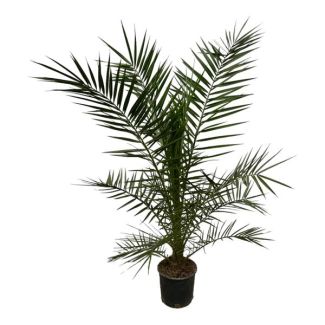
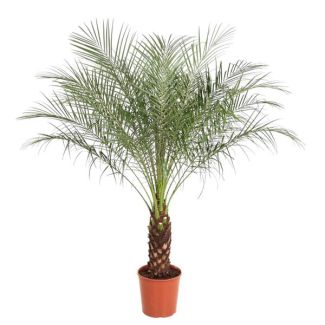
Several Phoenix species are suitable for indoor cultivation. Phoenix roebelenii (Pygmy date palm) is compact and well-suited for homes, while Phoenix canariensis and Phoenix dactylifera require more space. For a comparison of types and their characteristics, see Types of Date Palms.
Pet Safety
Most commonly grown indoor date palms (Phoenix spp.) are not considered highly toxic to cats or dogs. However, ingestion of large amounts may cause mild digestive upset. If you suspect your pet has eaten palm material and shows symptoms, consult a veterinarian for advice.
Available Date Palms
Related Topics
Frequently Asked Questions
- Is the date palm toxic to dogs and cats?
- Most indoor date palms (Phoenix spp.) are not considered highly toxic to pets. Mild digestive upset is possible if large amounts are ingested. If in doubt or if symptoms occur, consult a veterinarian.
- Which types of date palms are suitable for indoors?
- Phoenix roebelenii (Pygmy date palm) is most suitable for indoor spaces due to its compact size. Phoenix canariensis and Phoenix dactylifera can also be grown indoors if there is enough space and light.
- How often should I water a date palm?
- Water when the top 2–3 cm of soil feel dry. Frequency depends on light, temperature, and pot size, but typically ranges from once a week in summer to less in winter.
- What are common problems with date palms?
- Common issues include yellowing leaves, brown tips, slow growth, and pest infestations. These are often related to watering, humidity, or light conditions.