
Wisteria / blue rain

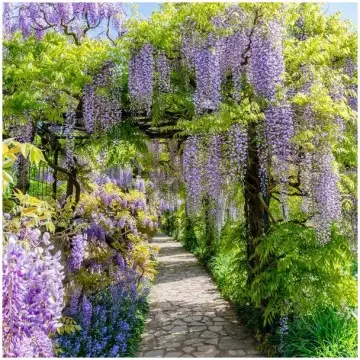
Wisteria: pure romance in the garden!
The wisteria (Wisteria floribunda) is a real eye-catcher. In spring, beautiful long flower clusters hang down that give your garden a fairytale-like appearance. A climber you can enjoy year after year!
• Spectacular hanging flower clusters
• Available in various colors
• Strong climbing plant for pergolas and façades
With wisteria you create a romantic and impressive atmosphere in your garden. A little patience… but then you'll be rewarded with a waterfall of flowers!
-
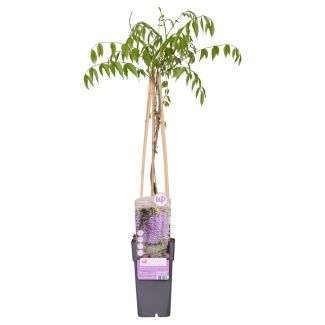 Wisteria 'Naga Noda' 1 or 2 piecesWisteria floribunda 'Naga Noda'As low as €50.95from €41.95 to €55.95
 -
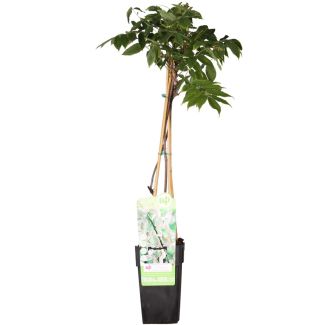 White Wisteria | 1 or 2 piecesWisteria floribunda ‘Longissima Alba’As low as €36.95from €41.95 to €55.95


Wisteria — FAQ
How do the different wisteria types and flower colours affect my choice?
Colour and raceme length are the main visible differences: purple/blue shades give the classic look, white or pale pink create a softer, romantic effect. Varieties also differ in vigour, scent and how early or late they flower. Choose by the visual mood you want plus the space and support available—pick a more vigorous type if you need quick coverage, or a less vigorous/grafted form if space or maintenance is limited.
What kind of support and how much space does a wisteria need?
Wisteria is a strong, woody climber that needs permanent, sturdy support (stout pergola beams, robust trellis anchored into masonry, or a solid arch). Allow room for a mature spread—many specimens develop several metres of stems and canopy—so avoid planting too close to fragile cladding or light structures. If you have limited space, choose a trained or container-grown form and prune regularly to control size.
How should I prune and feed wisteria to encourage regular flowering?
Pruning is essential: shorten the long summer shoots after flowering to keep shape and reduce shade, and perform a winter/narrow pruning to leave short flowering spurs for next spring. Remove weak, crossing or inward-growing stems and any unwanted suckers. Avoid high-nitrogen feeds (they promote leaf growth at the expense of flowers); give a balanced or bloom-focused feed and plant in a sunny, well-drained spot—both light and correct pruning are the most common reasons plants fail to bloom.
Where does wisteria work best in the garden and what visual effect can I expect?
Wisteria excels on pergolas, arbors, strong garden entrances and well-anchored façades where its long, hanging racemes and scent can be enjoyed from seating or a path. In spring it produces a dramatic cascade of flowers, in summer a leafy canopy and in winter a sculptural framework of woody stems. Be aware that flowering creates seasonal litter (fallen flowers and later seed pods) and that seed pods/seeds can be mildly toxic—clear them away if children or pets may come into contact.